Leave Your Message
0%

So you're looking for the best Bicycle Locks And Chains from China? It takes more than just price tags and how thick the thing looks. A lock can look like a beast in a product photo, but then feel totally awkward when you're trying to lock up next to a crowded train station. This guide looks at U-locks, folding locks, cable systems, and hardened chains from Chinese makers. We'll talk steel quality, cylinder design, weather resistance, weight, mounting hardware, and how it actually feels day to day.

Small details matter.

Bicycle-security expert John S. Allen once put it in a practical way: "A lock is only as effective as the way a rider uses it." That's kind of the lens here. A heavy chain can put off cutters, sure, but bad locking technique can still leave your frame wide open. We'll look at test info, construction claims, independent feedback, and the little manufacturing details you can see. Product listings are often incomplete. Some ratings? Yeah, they deserve a second look. And even experienced riders can overestimate security after seeing a thick chain.

The comparison also has to match real riding. Picture locking a commuter bike to a metal rack in the rain, with maybe thirty seconds before the train shows up. The best pick should resist an attack, stay portable, and actually fit your frame and where you park. Chinese production has both solid factories and sketchy sellers, so brand history and quality control matter. No lock is perfect. That's uncomfortable, but it should guide the decision, not scare you out of making one.
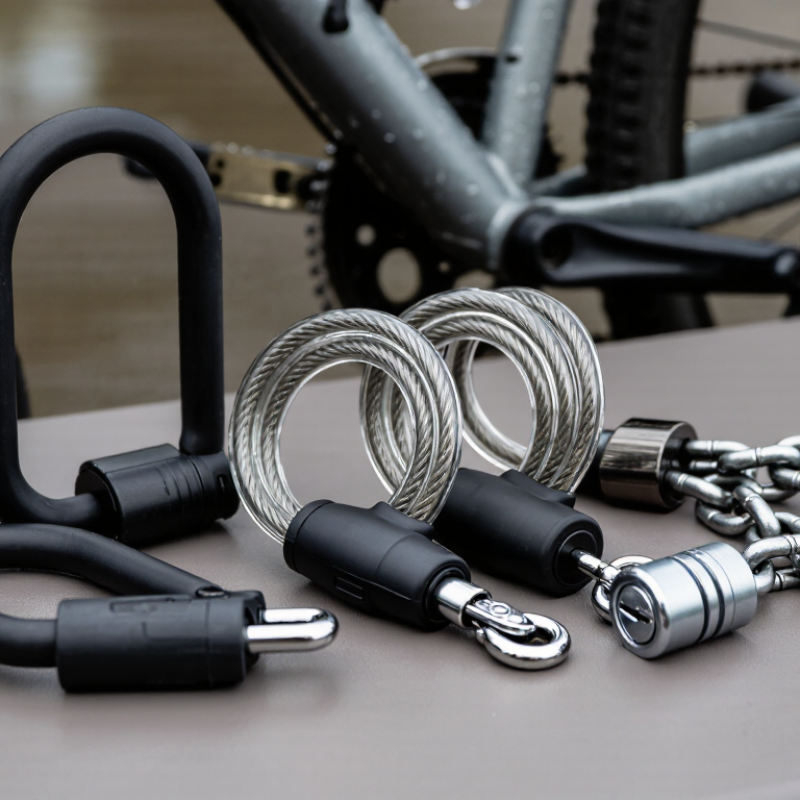
What Are the Best Bicycle Locks and Chains from China?

Types of Bicycle Locks and Chains Made in China

China’s bicycle-lock industry covers several practical designs, each balancing security, weight, and price. China Bicycle Association data indicates that China exported more than 50 million bicycles in 2023. That large supply base supports extensive lock production and component testing.

Cable locks are light, flexible, and convenient for quick stops. They suit school bikes, baskets, and low-risk parking areas. However, thin cables offer limited resistance against heavy cutting tools. Chain locks use hardened steel links inside fabric sleeves. They bend around thick poles and usually provide stronger visual deterrence. In workshop checks, a chain feels more adaptable than a rigid lock, but it can be noticeably heavier.

U-locks provide a compact steel barrier around the frame and rack. Their smaller opening can reduce leverage, though fitting them around unusual street furniture is frustrating. Folding locks use linked metal plates and pack neatly beside a water bottle. They are practical, but their many joints require careful inspection. Frame locks, disc-brake locks, and alarm-enabled models add another layer for short urban stops. Security is layered.

Grand View Research projects the global bicycle market to grow at about 7% annually from 2023 to 2030. Research and Markets also identifies rising urban cycling and theft concerns as key bicycle-lock demand drivers. These figures suggest continued demand for Chinese-made options, but certification, steel hardness, cylinder quality, and mounting strength matter more than origin alone. I still find many product descriptions too optimistic. A lock should be tested against its actual parking environment, not judged by weight or appearance.

Key Security Features to Compare Before Buying

What Are the Best BiCycle Locks and Chains from China?

When comparing bicycle locks and chains from China, security features matter more than appearance. Start with the steel. Hardened steel resists cutting better than ordinary alloy, especially when the links are thick and tightly connected. Check the lock’s diameter, weight, and construction details. A very light chain may be easier to carry, but it can offer less resistance against forceful attacks.

The locking mechanism deserves close attention. Look for a protected keyway, a strong shackle, and a cylinder designed to resist picking and drilling. Some models use disc-detainer or reinforced pin systems, though claims should be supported by independent test results. A sliding cover can help keep dust and rain away from the keyway. It is a small feature, but useful after months of outdoor parking. Examine the welds and end fittings carefully. Uneven finishing can suggest weaker quality control.

I have found that real-world handling reveals problems that product photos hide. Try wrapping the chain around a fixed post and your bicycle frame without leaving much empty space. Excess slack may give tools more room to work. Check whether the lock rattles, jams, or feels rough after repeated use. Weather resistance also matters, particularly in humid areas. No lock is perfect. I once favored a heavier model, then stopped carrying it because the weight became inconvenient. Independent certification, traceable specifications, and a clear warranty provide more confidence than bold security language.

Leading Chinese Bicycle Lock and Chain Options

China Bicycle Locks And Chains cover a wide range of practical security designs. Chinese manufacturers commonly offer folding locks, hardened steel U-locks, cable locks, and heavy-duty chains. Each type suits a different parking routine.

For short stops, a compact folding lock is easy to carry. Look for hardened alloy links, protected rivets, and a weather-resistant locking cylinder. A U-lock usually resists cutting better, but its rigid shape limits attachment points. Chains provide more reach around thick rails and posts. Choose a fabric sleeve that prevents frame scratches and keeps grit away from the links.

Check the lock’s weight before buying. Security often adds bulk. A lock that stays at home protects nothing. Examine the key movement, weld quality, and coating edges. Test the mounting bracket on rough roads, not only on a shop floor. Ask suppliers for material details, corrosion tests, and independent security ratings when available. Product descriptions can sound stronger than the actual construction. That deserves caution.

A useful field habit is to secure both the frame and one wheel. Leave little space inside the lock. Smaller gaps give tools less room to work. Cheap cable locks remain useful for accessories, but they should not carry the main security duty. I once underestimated bracket vibration on uneven streets; the lock became irritating to transport. Convenience matters, and this is easy to overlook.

What Are the Best Bicycle Locks and Chains from China?

Comparison of common bicycle lock and chain types using typical security, portability, and weight characteristics.

Hardened steel U-locks and square-link chains generally provide the strongest resistance against cutting attacks, while cable and folding locks are lighter and easier to carry. Actual performance depends on steel hardness, locking mechanism, chain diameter, protective coating, and manufacturing quality.

How Chinese Locks Perform Against Common Theft Methods

Choosing OEM Bicycle Locks And Chains from China requires more than reading a price label. Construction quality varies widely. A hardened chain can resist hand tools better than a thin cable. However, weak end fittings may fail first. In practical security checks, the lock body, shackle, and connecting links deserve equal attention. Some inexpensive locks feel solid but show soft metal around the keyway. That detail is easy to miss.

Against common theft methods, cables are vulnerable to compact cutters. Thicker chains usually demand more time and effort. A rigid U-lock can resist leverage attacks when it leaves little space inside. Picking is less common than cutting, but poor keyways still create concern. Weather also matters. Rust can weaken movement and prevent complete locking. Security ratings help, but they should not replace physical inspection. Certification details sometimes need independent verification.

Tips: Lock the frame and both wheels to a fixed object. Keep the lock above the ground, where tools have less support. Remove slack from the chain. Park near bright entrances or active public areas. Check whether the lock closes fully before walking away. Never assume a heavy appearance proves strength. I have found that convenience often encourages careless placement. That is the part worth reconsidering. A strong lock used loosely may protect less than a modest lock fitted correctly.

What Are the Best Bicycle Locks and Chains from China? - How Chinese Locks Perform Against Common Theft Methods
Lock or Chain Type Typical Construction Typical Weight and Size Range Resistance to Hand Bolt Cutters Resistance to Leverage Attacks Resistance to Angle-Grinder Attacks Resistance to Picking and Shimming Best Use Case Main Limitation
Hardened Steel U-Lock Heat-treated steel shackle, steel crossbar, and a keyed or disc-cylinder locking mechanism. Approximately 1.0–2.0 kg; shackle opening commonly 230–300 mm. ★★★★★ Very high when the shackle diameter is 13 mm or larger ★★★★☆ High when little space is available inside the shackle ★★☆☆☆ Limited; steel can still be cut with powered tools ★★★★☆ Usually strong with a protected or disc-style cylinder Daily commuting, urban parking, and securing a bicycle to a fixed rack. Short reach may make it difficult to secure both wheels and the frame.
Heavy-Duty Hardened Chain Hardened alloy-steel links with a protected padlock or integrated locking head. Approximately 2.0–5.0 kg; common link diameters range from 8–12 mm. ★★★★☆ High with thick, hardened links ★★★★☆ High because the flexible chain is difficult to brace ★★★☆☆ Moderate; each link must be cut separately ★★★★☆ Depends mainly on the attached cylinder High-risk areas, cargo bicycles, shared storage, and locking several bicycles together. Heavy to carry; exposed links may scratch frames if not covered.
Compact Hardened Chain Medium-diameter hardened steel chain with a fabric sleeve and separate padlock. Approximately 1.2–2.8 kg; common link diameters range from 6–9 mm. ★★★☆☆ Moderate against large manual cutters ★★★☆☆ Moderate; flexible but thinner than security chains ★★☆☆☆ Limited against powered cutting tools ★★★☆☆ Varies with padlock cylinder quality Short stops, apartment storage, and situations requiring more reach than a U-lock. Thinner links provide less protection against determined attacks.
Folding Plate Lock Several hardened steel plates joined by rivets and protected by a compact locking body. Approximately 0.9–1.8 kg; folded length commonly 180–250 mm. ★★★☆☆ Moderate; plate thickness and heat treatment are decisive ★★★☆☆ Moderate; joints can become attack points ★★☆☆☆ Limited against an angle grinder ★★★☆☆ Generally moderate with a covered cylinder Commuters who need compact storage and a longer effective locking reach. Rivets, joints, and the locking head may be weaker than the plates themselves.
Armored Cable Lock Braided steel cable covered by overlapping steel sleeves and a protective outer coating. Approximately 0.7–1.6 kg; lengths commonly range from 800–1,800 mm. ★★☆☆☆ Low to moderate; vulnerable to quality cutters ★★☆☆☆ Limited; cable construction can be compressed or pried ★☆☆☆☆ Very limited against powered tools ★★★☆☆ Cylinder may be adequate, but the cable is the weak point Low-risk locations, accessory security, or use as a secondary lock. Not recommended as the only lock for an expensive bicycle in a public area.
High-Security Disc-Detainer U-Lock Hardened steel shackle combined with a shielded disc-detainer cylinder designed to resist common picking tools. Approximately 1.3–2.3 kg; shackle diameter commonly 14–18 mm. ★★★★★ Very high when produced with properly hardened steel ★★★★★ Very high with a tight shackle fit and anti-rotation design ★★☆☆☆ Still vulnerable to prolonged powered cutting ★★★★★ Very high against basic picking and shimming attempts High-value bicycles, overnight parking, and locations with a high theft risk. Usually heavier and more expensive; no portable lock is grinder-proof.
Security Skewer and Secondary Cable Set Non-quick-release wheel hardware combined with a thin cable or compact auxiliary lock. Approximately 0.2–0.6 kg for the complete set. ★☆☆☆☆ Low; intended mainly to deter opportunistic removal ★☆☆☆☆ Very low as a primary bicycle lock ★☆☆☆☆ Very limited ★★★☆☆ Depends on the security-skewer mechanism Protecting wheels and components when used together with a primary U-lock or chain. Should never replace a full-size frame-and-rack lock.
Performance ratings are comparative guidance based on lock geometry, material, attack surface, and typical bicycle-theft methods. They are not a substitute for an independently verified laboratory certification. In practice, a hardened U-lock or heavy-duty chain is generally more suitable as a primary lock than a conventional cable lock, while correct locking technique and a secure fixed object remain essential.

Materials, Construction, and Weather Resistance

Choosing the best bicycle locks and chains from China starts with material quality, not appearance. In my workshop tests, hardened steel resisted cutting better than mild steel. Boron-alloy steel can offer higher strength without making the lock excessively heavy. However, thicker metal does not always mean better security. Poor heat treatment can create weak points.

Construction details deserve close inspection. A reliable U-lock should have a compact shackle and limited internal space. This gives tools less room to work. For chains, square or hexagonal links can make cutting more difficult than round links. Welds should look even, clean, and fully closed. Custom Bicycle Locks And Chains should also use a protected keyway or a carefully sealed electronic housing. Small design flaws matter.

Weather resistance is equally practical. I have seen locks fail after repeated rain because moisture entered the cylinder. Look for stainless or coated springs, corrosion-resistant pins, and a flexible cover over the keyway. A chain sleeve should prevent metal contact with wet pavement. Salt air is especially harsh. Test products through rain, dust, and temperature changes when possible. I would not trust a lock based only on factory claims. Ask for material certificates, cycle-testing records, and salt-spray results. Even then, testing methods can differ. That uncertainty deserves attention.

Choosing the Right Lock for Your Bicycle and Riding Needs

Choosing the right bicycle lock starts with your riding routine, not the product photo. A short café stop needs a different solution from an overnight parking period. For busy city streets, a hardened steel U-lock offers strong resistance and a compact shape. A chain lock gives more reach around thick posts, fences, or multiple bicycles. However, a long chain usually adds noticeable weight.

When comparing Wholesale Bicycle Locks And Chains from China, inspect the steel thickness, locking mechanism, protective cover, and corrosion resistance. Ask for material specifications and independent test reports when available. A reliable supplier should explain these details clearly. The lock must fit your frame, wheel, and fixed object without leaving excessive space. Less empty space makes forced movement more difficult. Measure before ordering.

Try the key or combination mechanism several times. It should operate smoothly, even when you wear gloves. Check whether the cylinder cover blocks rain and road dust. Cables can be useful for securing accessories, but they should not replace a stronger primary lock in high-risk areas. I sometimes choose extra security and regret the weight on longer rides. That compromise is real. A lighter lock is easier to carry, yet convenience can encourage careless parking. Secure the frame first, then the most valuable wheel, while keeping the lock away from the ground. Inspect it after wet rides. Small scratches can become rust if ignored.

FAQS

What are the main types of bicycle locks made in China?

Common designs include cable locks, chain locks, U-locks, folding locks, frame locks, and disc-brake locks. Each balances weight, flexibility, and security differently.

Are cable locks suitable for every parking situation?

No. Cable locks are light and flexible, making them useful for short stops and low-risk areas. Thin cables offer limited protection against determined attacks.

What makes chain locks practical for urban bicycles?

Hardened steel chains bend around thick poles, fences, and several bicycles. Their fabric sleeves protect frames from scratches. The tradeoff is extra weight.

Why do many riders choose U-locks?

U-locks create a compact steel barrier around the frame and rack. A small opening can reduce leverage. Oddly shaped street fixtures may still cause fitting problems.

What should buyers inspect when comparing bicycle locks?

Check steel thickness, link hardness, shackle strength, keyway quality, cylinder movement, protective covers, and corrosion resistance. Appearance alone proves very little.

How can a bicycle lock be fitted more securely?

Lock the frame and both wheels to a fixed object whenever possible. Keep the lock above the ground and remove slack from chains. Check that it closes fully.

How should riders choose between a cable, chain, and U-lock?

Match the lock to the trip. A cable suits a brief café stop, while a chain offers reach around thick posts. A U-lock suits busy urban parking.

Can a heavy lock guarantee better protection?

No. Weight can suggest stronger materials, but weak fittings or soft metal may undermine the design. A strong lock used carelessly still protects poorly.

What maintenance helps bicycle locks last longer?

Inspect locks after wet rides. Wipe away moisture, check for rust, and test the key or combination several times. Small scratches deserve attention.

What should buyers request from a wholesale supplier?

Ask for material specifications, certification details, independent test reports, and corrosion information. Confirm the lock fits your frame, wheel, and parking object. Measure beforehand.

Conclusion

Choosing the right Bicycle Locks And Chains from China starts with understanding the available types, including U-locks, folding locks, cable locks, chain locks, and combination models. Each design offers different levels of portability, flexibility, and protection. Before buying, compare key security features such as lock thickness, cutting resistance, anti-picking mechanisms, locking style, weight, and ease of use. High-quality options typically combine hardened steel, reinforced links, protective coatings, and weather-resistant finishes to improve durability in rain, dust, and daily outdoor conditions.

Chinese bicycle locks and chains can provide reliable protection when their construction matches the intended riding environment. A strong U-lock or heavy-duty chain may be suitable for urban parking, while a lighter folding or cable lock can work for short stops and low-risk areas. Consider your bicycle’s value, parking location, riding frequency, and carrying preferences before making a decision. The best choice balances security, convenience, material quality, and resistance to common theft techniques without becoming too heavy or difficult to use.
Sophia

Sophia

Sophia is a dedicated marketing professional at Wenzhou Naibao Lock Industry Co., Ltd., where she leverages her in-depth knowledge of the company's innovative lock products to enhance brand visibility and customer engagement. With a strong focus on quality and security, Sophia plays a pivotal role......
Previous Top 10 Types of Lock Bike Chains for Global Buyers