Okay, so you're in the market for a Bike Lock, huh? Here's the thing: there's no such thing as a lock that makes your bike 100% theft-proof. What a lock actually does is just make it a pain in the neck for a thief to take your bike—slower, more awkward, and way more noticeable. The whole decision really comes down to one simple question: where are you usually parking? I mean, stopping for a coffee at a busy café for ten minutes is one thing. But if you're leaving your bike overnight outside an apartment building where nobody's around? That's a completely different ballgame.
So, there's this cycling writer Sheldon Brown – he's often quoted as saying 'The best lock is the one you use.' Though I should mention, you might want to double-check the exact wording if you're planning to cite him. But the point stands: a heavy lock that's sitting at home isn't protecting anything. When it comes to choosing a lock for your bike, you'll typically come across U-locks, chains, folding locks, and cable locks – pretty much the usual suspects. (And if you're wondering about the specifics, here's a Bike And Lock guide.) You know, every lock has its own trade-offs—security, weight, price, and convenience all play a part. Like, a compact U-lock might keep your frame and one wheel locked to a sturdy rack, and then you can use a cable for extra wheel protection, which is pretty flexible. But here's the catch: thin cables are ridiculously easy to snip through. And that's the one thing people tend to overlook, honestly.
So, you're looking at bike locks, huh? This guide breaks down the usual suspects—the common lock types—and gets real about what those ratings actually mean (and what they don't). We'll also talk about how the lock fits, whether it's a pain to carry around, and the whole deal with securing your bike by the frame. Look, no lock is perfect, right? Picking one really comes down to your bike's worth, where you usually park, and the kind of neighborhood you're leaving it in. So before you hand over your cash, take a close look—and maybe think twice.
What a Bike Lock Is and How It Secures a Bicycle
A bike lock is a physical barrier that connects a bicycle to a fixed object or secures parts of the bike together. It works by making removal harder and slower, not impossible. A hardened shackle resists cutting; a chain’s linked steel sections can wrap around awkward racks. A cable is lighter, but generally offers less resistance to deliberate attacks. That matters.
Sold Secure’s published bicycle-security scheme has four ratings: Bronze, Silver, Gold, and Diamond. These indicate different levels of resistance assessed through attack testing; they are useful for comparing locks, not guarantees against theft.
Choose a lock suited to the bike’s value and where it will be left. Secure the frame and, when practical, a wheel to an immovable rack. Keep the lock off the ground, where tools may gain leverage. A Bike Chain And Lock can be convenient for securing multiple parts, though its weight may make daily carrying less appealing. Small detail.
Even a highly rated lock can be poorly used: a loose chain or a rack that lifts free weakens the whole setup. I would check the parking point as carefully as the lock itself. That part is easy to overlook.
The Main Parts and Security Features of a Bike Lock
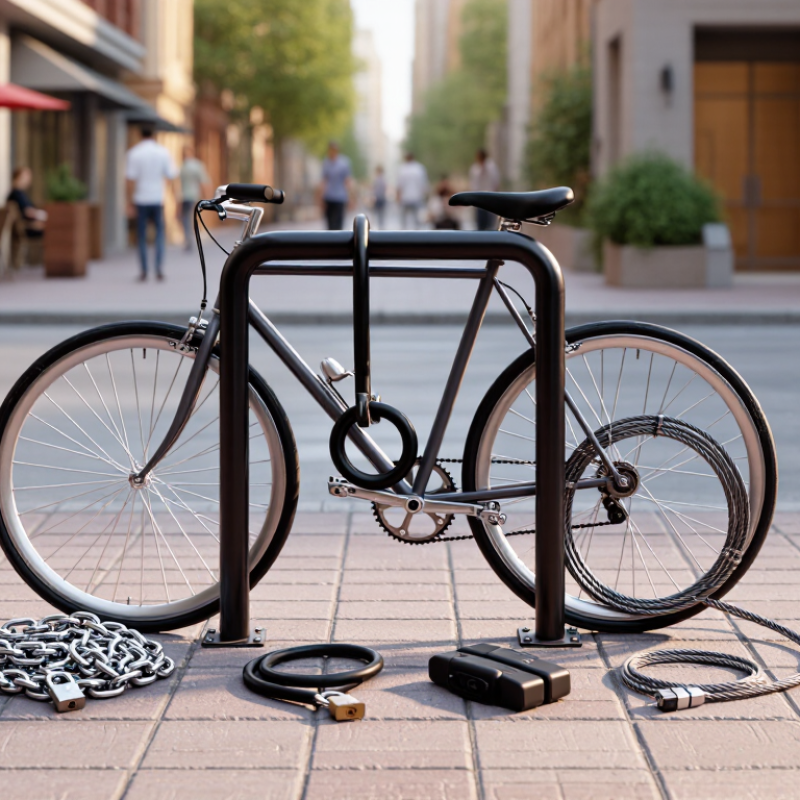
A bike lock has three main parts: the body, the locking mechanism, and the section that wraps around the bicycle. On a U-lock, that section is a rigid steel shackle. A chain lock uses linked metal rings, while a cable lock is lighter and easier to route. The locking body holds the cylinder or combination dial. Small details matter. A covered keyway can help keep rain and grit away, and a double-locking shackle secures both ends instead of one. Hardened steel can resist cutting better than soft metal, but thickness alone does not guarantee security. A bulky lock may still leave enough room for leverage.
Security features work best when the lock fits the job. Pass it through the frame and a wheel, then attach it to a fixed rack; avoid leaving a wheel secured while the frame remains loose. Keep the lock close to the bicycle, with little open space inside the shackle or chain. No lock is invulnerable. A lighter cable can be handy for brief stops, but it offers less resistance to cutting than a substantial U-lock or chain. It is easy to overrate a lock’s advertised features and overlook daily habits. Check that the mechanism closes smoothly, especially after dusty or wet rides. A lock that is awkward to use may get left behind.
Common Types of Bike Locks and How They Work
Common Types of Bike Locks and How They Work
A U-lock uses a rigid steel shackle to secure a frame to a fixed rack. Its compact shape limits leverage, but a small model may not fit around the frame and wheel together. A hardened chain offers more reach and can wrap around awkward posts. It is heavy, though, and a chain left dragging on the ground is easier to attack.
Folding locks combine linked steel bars with compact storage. Their joints add flexibility, but also create points that deserve careful inspection. Cable locks are light and convenient for brief stops; thin cables offer much less resistance to cutting. No lock is invulnerable. That is worth remembering.
Independent ratings can help compare designs. The ART Foundation’s published system awards approved locks from one to five stars after testing, offering a useful resistance benchmark rather than a theft-prevention guarantee. Check the exact model’s rating, not just its lock category. In practice, lock the frame and at least one wheel to a fixed object, keeping the lock raised and clear of the ground. Pairing a Bike Helmet And Lock in your daily routine is sensible, but they solve different problems: a helmet protects your head, while lock choice depends on parking time, location, and how much weight you will carry.
How Lock Types Compare in Strength, Weight, and Convenience
What Is a Bike Lock and Which Type Is Best?
How Lock Types Compare in Strength, Weight, and Convenience
A bike lock secures the frame, ideally alongside a wheel, to a fixed object. U-locks are rigid and usually offer strong resistance to cutting and leverage. Their compact shape can make them awkward around thick racks or crowded bike stands. Strong, but less flexible. Chain locks bend around unusual fixtures and can secure multiple parts of a bike. Hardened links can provide substantial resistance, though thicker chains are heavy to carry. That weight gets noticeable on a longer ride.
Folding locks balance portability and reach. Their linked metal bars pack neatly, but joint design and construction affect their strength. Cable locks are light and easy to thread through wheels, yet many are better suited to brief stops in lower-risk places than overnight parking. No type is perfect. A lock that stays at home protects nothing, and I’ve found convenience can matter more than a small difference in weight.
Tips: Choose a lock you’ll carry every ride. Secure the frame to a fixed rack, keep the lock off the ground, and minimize open space inside it. For longer stops, use two different lock styles when practical. Check the rack, too; a strong lock around a loose fixture is a weak setup.
What Is a Bike Lock and Which Type Is Best?
A bike lock secures a bicycle to an immovable object. The chart compares typical lock types on relative security and everyday convenience, using an illustrative 1–5 scale.
How to read it: Ratings are comparative guidance, not results from a standardized test; construction and design vary between locks. Typical weights also vary: cable locks are often about 0.2–0.7 kg, folding locks 0.8–1.5 kg, U-locks 1–2 kg, and chains 1.5–3 kg. For stronger theft resistance, a quality U-lock or chain is generally a better choice than a cable lock; cables are light and convenient for low-risk stops or as a secondary lock.
Factors to Consider When Choosing a Bike Lock
A bike lock is only useful if it fits your daily routine and the places you park. Consider the bicycle’s value, local theft risk, and how long it will be left unattended. A hardened U-lock can resist many common cutting attempts, but its shape may not fit every frame or rack. A chain offers more flexibility, though a heavy one can become tiresome to carry. Weight matters.
Check the lock’s usable size before buying. It should secure the frame and, ideally, a wheel to a fixed rack without leaving much room for tools. Look for a reputable independent security rating, and inspect the locking mechanism for smooth operation. Weather matters too: rain and grit can make a neglected mechanism stiff. No lock is magic. I once underestimated how awkward a bulky lock felt on a long ride; convenience affects whether you use it consistently.
Tips: Park in a visible, well-lit place, and keep the lock off the ground when practical. Remove easy-to-steal accessories, and avoid leaving a bicycle overnight in a quiet spot. Pairing a Bike Lock And Helmet with a quick parking check is a simple habit, though no routine removes all risk.
How to Use a Bike Lock to Reduce Theft Risk
A bike lock is a device that secures a bicycle to a fixed object and makes theft harder. The best type depends on where you park and how long you leave your bike. A sturdy U-lock or heavy chain can help resist common attempts to remove a bicycle, but no lock makes theft impossible. Start by choosing a solid, immovable bike rack in a visible, well-used area.
At the rack, pass the lock through the frame and, if possible, the rear wheel, then secure it to the rack. Make sure the rack cannot be lifted over or easily loosened. Keep the lock close to the frame, with little room for tools, and avoid letting it rest on the ground. Tug the Bike And Lock before leaving.A small check matters. Don’t lock only the front wheel; it can be removed from many bikes.
Park in a bright place, and use a second lock for a removable front wheel when theft risk is higher. Take lights, bags, and other quick-release items with you. Bike Lock And Alarm systems can add a loud warning, but an alarm is a supplement, not a substitute for a physical lock. Even careful locking can feel inconvenient, and it is easy to rush when you are late. A brief check of the frame, wheels, and rack can catch a simple mistake.
Conclusion
A bike lock is a device that helps secure a bicycle by connecting it to a fixed object or preventing its wheels from turning. Its protection depends on more than the outer casing: the locking mechanism, materials, design, and resistance to cutting or prying all matter. Common options include rigid U-shaped locks, flexible cable locks, folding locks, and chain locks. Each balances security, weight, flexibility, and ease of carrying differently, so no single type suits every rider or situation.
When choosing a Bike And Lock setup, consider where and how long the bicycle will be left, the value of the bike, and how much weight you are willing to carry. A stronger lock may be heavier, while a lighter one may be easier to transport but offer less resistance. To reduce theft risk, lock the frame and, when possible, a wheel to a sturdy, fixed object; keep the lock close to the bicycle and avoid leaving unnecessary space inside it. Combining careful parking with a suitable lock can make a bicycle harder to take.