A Cycle Lock is one of those go-to security gadgets that cyclists often rely on to keep their bikes safe from thieves. Basically, its main job is to lock your bike to something solid so no one can just walk away with it. There are different kinds out there—U-locks, chain locks, folding locks—you name it. And honestly, each one offers a different level of security, so it’s pretty important for us riders to pick the right one.
Now, a big factor in how well a lock actually works comes down to its design and what it’s made of. A tough U-lock tends to be way more secure than a flimsy cable lock—no contest. But here’s the thing—many of us forget that how you lock up is just as crucial. If you don’t lock your bike correctly or attach it in a vulnerable spot, all that security might not matter much. The truth is, even the fanciest lock can’t absolutely guarantee your bike's safety.
Using a Bike Cycle Lock is pretty common among cycling enthusiasts, yet surprisingly, a lot of folks still get their bikes stolen. It kinda points to the fact that many of us might not fully grasp how important good locking habits actually are. Remember, the best lock is only as good as how you use it. With bike theft on the rise, maybe it’s time for us to rethink our locking routines and do a better job of protecting our rides.
Definition of a Cycle Lock and Its Purpose
A cycle lock is a vital tool for securing bicycles. It acts as a deterrent against theft and enhances safety. Statistics show that over 1.5 million bicycles are reported stolen each year in the U.S. This alarming figure highlights the importance of using a reliable Cycle Bike Lock. They come in various types, including U-locks, chain locks, and folding locks. Each offers different levels of security and convenience.
The primary purpose of a cycle lock is to protect your investment. A good lock can prevent unauthorized access to your bike. According to a recent industry report, over 80%of theft incidents occur in public areas. Using a quality Cycle Bike Lock can significantly reduce your risk. However, even the best locks can be compromised if not used correctly. Many riders forget simple safeguards likesecuring both the frame and wheels.
Not all locks are created equal. While some may boast high security ratings, they often lack portability. In some cases, bulky locks can deter riders from carrying them. A balance between security and convenience is crucial. Many cyclists struggle to choose the right lock. It’s a common dilemma but vital for protecting your bicycle investment. Understanding the strengths and weaknesses of cycle locks can lead to better decision-making.
Types of Cycle Locks: An Overview
When it comes to securing bicycles, various types of cycle locks are available. Each type offers unique benefits and has specific features. U-locks, for instance, are quite popular for their strength. They consist of a rigid metal frame, which makes them hard to break. However, their bulkiness can be inconvenient for some cyclists.
Another type worth mentioning is the chain lock. This lock consists of a heavy-duty chain encased in protective material. While chain locks are flexible in terms of locking points, they can be heavy and cumbersome to carry. Also, some chains are more susceptible to cutting than others.
Cable locks, though lightweight and easy to handle, often provide less security. They are best used in low-risk areas. These locks may not deter thieves in higher-crime locations. Lastly, folding locks offer a compromise between size and strength, but they can be pricey. Understanding the differences can help riders choose the right lock for their needs. Still, no lock is entirely foolproof, and that's something every cyclist must consider.
Cycle Lock Types and Their Popularity
How a Cycle Lock Functions Mechanically
A Cycle Lock is a device designed to secure bicycles and other cycles. Its mechanical function is straightforward yet effective. When you close the lock, it engages a solid locking mechanism. This can be a pin or a shackle that fits into a loop or hole, preventing the cycle from being moved. The lock uses basic principles of mechanics, employing tension and release to secure itself.
Inside, a Cycle Lock often includes a combination of rotating discs or pins. Each pin must align precisely for the lock to open. Misalignment can lead to frustration. It’s intriguing how even a tiny speck of dirt can jam the mechanism. Some locks may also feature a spring-loaded system that reinforces the closing action. Users might overlook these details while locking up their cycles.
In daily use, people might forget to check the lock's integrity. A worn-out or rusty lock can compromise security. It's crucial to regularly inspect the Cycle Lock to ensure it functions smoothly. Engaging with these mechanical elements can deepen one’s understanding of security measures. Locking up a cycle should be routine, but the mechanical principles behind it warrant appreciation.
Advantages of Using a Cycle Lock
A cycle lock is essential for securing your bicycle. One significant advantage of using a cycle lock is that it deters theft. Many thieves avoid bicycles that look protected. A solid Cycle Lock Chain can make your bike less appealing. The sight of a durable lock often makes them reconsider their plan. It's a simple yet effective way to keep your bike safe.
Another advantage is the peace of mind it offers. Knowing your bike is locked gives you confidence while you are away. You don’t need to constantly worry about its safety. A good cycle lock chain allows you to enjoy your ride without stress. However, it’s crucial to choose the right spot to lock your bike. Even the best lock can be ineffective if used improperly.
There are various types of cycle locks, each with unique features. Some are heavier yet more secure, while others are lighter but may not be as tough. It’s necessary to weigh the advantages and disadvantages. Not all cycle locks are created equal. A cheaper one might compromise your bike’s security. Make sure to find a balance that suits your needs and lifestyle.
Common Mistakes When Using Cycle Locks
Cycle locks play a crucial role in protecting bicycles from theft. However, users often overlook common mistakes that can undermine their effectiveness. According to a study by the National Bicycle Dealers Association, around 1.5 million bicycles are stolen each year in the U.S. alone. This alarming statistic highlights the need for proper usage of cycle locks.
One mistake is using a weak lock. Many cyclists opt for lightweight locks, thinking they are convenient. But lightweight locks are often easy targets for thieves. A report from the Bureau of Justice Statistics shows that over 60% of stolen bikes had insufficient locking systems. Another oversight is failing to lock the bicycle in the right way. Cyclists should secure both the frame and wheels, but many lock only the frame. This creates opportunities for thieves. In fact, the majority of bike thefts occur in public areas, where visibility is key.
Another frequent error is not maintaining the lock itself. Wear and tear can compromise a lock’s integrity. Regular checks can prevent failures at critical moments. Studies indicate that almost 20% of bike owners experienced theft due to faulty or neglected locks. Improving awareness of these common pitfalls can help cyclists make informed choices for better security.
Tips for Choosing the Right Cycle Lock
Choosing the right cycle lock is crucial for bike security. Several factors come into play when making this decision. Consider the material and design of the lock. A strong lock can be challenging for thieves. Look for a lock that is made from hardened steel. This type of material resists cutting. Many riders prefer a Chain Cycle Lock for flexibility and strength. These locks can wrap around bike frames and secure wheels easily.
Weight is another consideration. Heavier locks may offer more security but can be cumbersome to carry. Think about your daily routine. If you often travel long distances, a lighter lock might be necessary. However, it may compromise security. Always test the locking mechanism. You want to ensure it works smoothly without sticking. A frustrating lock can lead to missed opportunities.
Lastly, reflect on your bike's location. Is it often parked in high-crime areas? If so, a more robust lock may be worth the investment. Do not let the cost deter you. Sometimes spending a bit more leads to greater peace of mind. Remember that a lock is only as good as its use. Properly securing your bike is essential.
Maintenance and Care for Cycle Locks
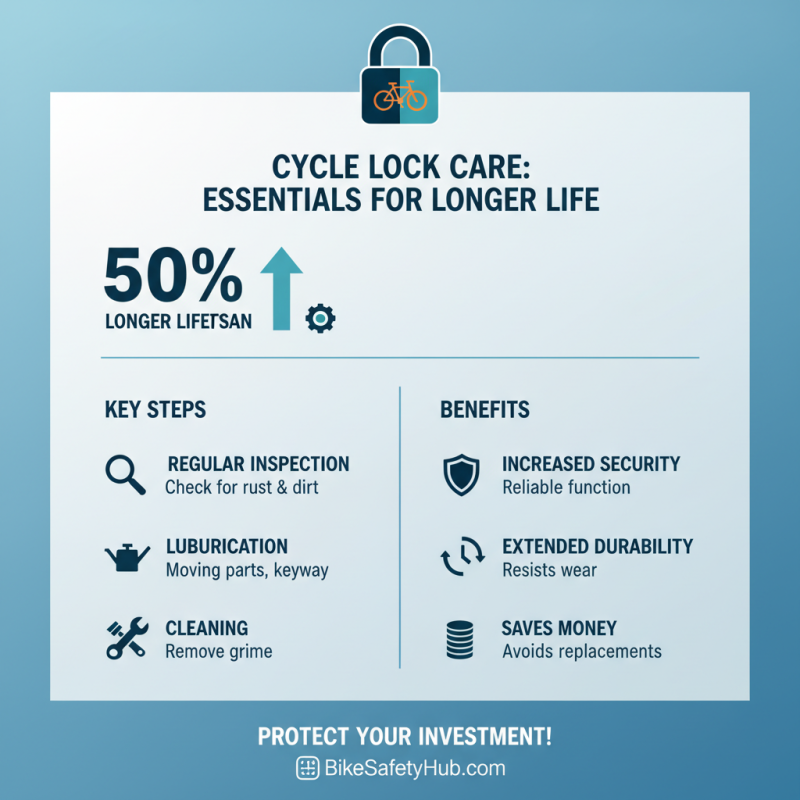
Cycle locks are essential for securing bicycles, but maintaining them is equally crucial. Proper care can extend their lifespan and ensure they function effectively. Research shows that a well-maintained lock can last up to 50% longer than one that is neglected. Regular inspection is key. Check for any rust or dirt that may have accumulated over time.
Tips: Clean your lock with a soft cloth regularly. This simple step helps prevent the build-up of grime. Lubrication is another vital aspect. Applying a silicone-based lubricant can keep the internal mechanisms smooth and prevent jamming. Aim to do this every few months, more often in rainy or coastal areas.
A common mistake is ignoring minor damages. If you notice a crack or any misalignment, address it immediately. Delaying repairs can lead to failure when you need it most. Additionally, ensure that the keyhole remains clear of debris. Small particles can interfere with the locking mechanism and make it difficult to use. Regular maintenance fosters reliability, while neglect can lead to frustration. Taking these simple steps ensures your cycle lock serves you well.
Enhancing Bicycle Security: Analyzing Industry Data on Anti-Theft Solutions and the Effectiveness of Nurbo Steel Bike Cable Lock
As urban cycling continues to surge in popularity, ensuring the security of bicycles has become a paramount concern for riders. Anti-theft solutions are evolving in response to an increase in theft incidents, and various products are being evaluated for their effectiveness. Among the many options, cable locks have gained favor due to their flexibility and convenience. A particular model features a sturdy braided steel wire rope that is not only resistant to strong cutting but also designed to withstand various weather conditions. This level of durability ensures that cyclists can rely on the lock for long-term use, regardless of the environment.
The design of the lock allows for easy storage and portability, making it a practical choice for everyday use. With a cable size of 15/18 x 800 mm, it can effectively secure bicycles while being simple to carry. Additionally, the inclusion of two brass keys and an ABS case adds to its user-friendly design. Cyclists can easily roll up the lock, ensuring it won’t take up much space when transported. This multiplication of use cases—whether locking up a bike at the park, securing it at a café, or while commuting—enhances the appeal of such anti-theft solutions, granting cyclists peace of mind when they leave their bikes unattended.
FAQS
: The product aims to enhance daily life. It addresses common needs. Users find it useful for specific tasks.
Simply follow the included instructions. Start by setting it up in a convenient area. Adjust settings as needed.
Yes, avoid exposing it to extreme temperatures. Keep it away from water sources. Regularly check for wear and damage.
The product consists of durable materials. They ensure longevity and performance. However, handling with care is still important.
It is best suited for indoor use. Outdoor conditions may affect performance. Repeated exposure could lead to issues.
First, try troubleshooting based on the manual. If problems persist, consider reaching out for support. Feedback is valuable for improvement.
Conclusion
A cycle lock is a security device designed to protect bicycles from theft. It serves as a deterrent by securing the frame and wheels to an immovable object, thus preventing unauthorized access. Various types of cycle locks, including U-locks, chain locks, and cable locks, each offer different levels of security and convenience.
Mechanically, a cycle lock operates through a locking mechanism that engages when the shackle or chain is closed. The advantages of using a cycle lock include increased safety for your bike and peace of mind for the owner. However, users often make common mistakes, such as not locking their bikes properly or choosing overly light locks. To avoid these pitfalls, it’s crucial to select the right type of cycle lock based on your needs and to maintain it regularly for optimal performance.