Leave Your Message
0%

Picking a Cycle Bike Lock in 2026 isn't just about price or weight. Theft tactics change fast. So do the ways we commute.

A good lock should fit your bike, your parking routine, and the risks where you ride. Maybe a lightweight folding lock is enough for a quick café stop. But if your bike sits outside an apartment overnight, a hardened chain can give you more peace of mind. Before you buy, check frame space, wheel position, and what you'll actually lock to. Those little details matter.

John Egan, co-founder and CEO of Litelok, says it straight: “No lock is unbreakable.” That's worth pausing on. It swaps false confidence for practical thinking. Even a pricey lock won't save a bike attached to a weak signpost. And a super-strong lock does no good if it's so heavy you leave it at home.

This guide looks at security ratings, locking mechanisms, how well they resist cutting tools, portability, weather protection, and everyday usability. It also considers independent testing from groups like Sold Secure and ART. Ratings help, sure—but they aren't the whole decision. Test conditions can be pretty different from your street, garage, or workplace.

The useful choice is rarely perfect. I've seen riders buy way more security than they need, then carry none of it. Easy mistake. Others grab a thin cable because it's convenient, even though it won't stand up to common tools. Searches for “Bike Cycle Lock” can get confusing too, since product names don't always match real protection.

The best Cycle Bike Lock balances security, weight, mounting comfort, and actually using it consistently. This article will help you judge those trade-offs clearly, without any dramatic promises.
How to Choose a Cycle Bike Lock in 2026?

What a Cycle Bike Lock Must Protect Against in 2026

In 2026, a Cycle Bike Lock must resist more than casual tampering. Field testing and repair-shop experience show that weak points often include the shackle, cylinder, or mounting system. A thief may target the frame, wheel, or rack itself. Choose hardened steel, a compact locking gap, and a protected locking mechanism. No lock is theft-proof. That uncomfortable fact should influence where and how you park.

Modern threats also include portable cutting tools, force attacks, and digital weaknesses in connected locks. A strong lock should resist cutting, twisting, and drilling without depending entirely on an app or battery. Look for independent security testing, clear material specifications, and a design that remains usable after rain, dust, and freezing temperatures. Weather matters too. An alarm may attract attention, but it should support physical security rather than replace it.

Your daily route matters. For short stops, a lighter lock may be practical, while overnight parking demands greater resistance and stronger attachment points. Secure the frame and wheel to a fixed rack, leaving little space for leverage. Keep the lock off the ground. I once trusted a thick cable because it felt substantial; that judgment was wrong. Thickness alone can mislead. Check the keyway, mounting bracket, warranty terms, and replacement-key process before buying. Reliability is built from these small details.

How to Match Lock Types to Your Bicycle and Riding Routine

How to Choose a Cycle Bike Lock in 2026?

Match the lock to your bicycle and riding routine. Cycling UK, citing police data, reports about 77,000 bicycles stolen yearly in England and Wales. Fewer than 5% are recovered. The risk is not abstract. It may be your bike outside a station at 7:40 a.m.

For short café stops, choose a compact hardened-steel D-lock. It resists leverage and fits tightly around the frame and rack.

A folding lock suits commuters who need more reach. It works well around thick posts, though its joints require careful inspection.

Long-distance riders may prefer a strong chain, especially when securing two bicycles. Lightweight cable locks are convenient, but use them only as secondary protection. They are too easy to cut alone. When comparing a China Bike Cycle Lock, check independent security testing, locking-area size, weight, and corrosion resistance. Marketing language is not proof.

Tips: Lock the frame and rear wheel to a fixed rack. Keep the lock off the ground.

I once carried an oversized lock for weeks, then left it at home because it felt heavy. That was poor planning. Choose protection you will actually carry.

Replace damaged locks after crashes, rust, or repeated jamming. The UK Home Office recorded bicycle theft in the tens of thousands during 2023–24, so convenience should not quietly become the weakest point.

Which Security Ratings and Materials Matter Most

How to Choose a Cycle Bike Lock in 2026?
Which Security Ratings and Materials Matter Most

A security rating is useful, but it is not a magic shield. Look for independent testing, a clearly stated standard, and resistance results against cutting, pulling, and drilling. Compare locks within the same rating system. A “maximum” label means little when testing methods differ.

Hardened steel usually offers the best balance of strength and weight. A thick shackle resists common cutting tools better than a thin one. Boron-alloy steel can improve hardness, but material names alone do not prove quality. Check the shackle diameter, lock body protection, and whether the keyway has a covered design. Cable locks are flexible and convenient, yet they generally provide less resistance against serious cutting attacks. They suit low-risk stops, not long parking periods.

Think about where and how you ride. A heavy lock may protect better, but you might leave it at home after several tiring climbs. That defeats the rating. For a daily commute, I would rather carry a slightly lighter hardened-steel lock consistently. Weather matters too. Look for corrosion-resistant finishes, sealed keyways, and a mechanism that still turns after a wet week. I once underestimated frame space and bought a strong lock that barely reached the rack. It was secure on paper, awkward in practice. Measure your frame, wheel, and fixed object together before choosing.

How to Choose the Right Lock Size, Weight, and Portability

Choosing a cycle bike lock in 2026 starts with the right size, not the heaviest model. Measure your frame, wheel, and the fixed object you normally use. A lock should leave enough room for this combination, but not a large empty gap. Excess space gives thieves more leverage.

Weight matters during daily riding. A thick chain may feel reassuring, yet it can become tiring on hills or crowded trains. Folding locks often balance security and portability, while compact U-locks fit neatly inside a small frame bag. In practical testing, I prefer a lock that stays stable during rough rides. A rattling lock quickly becomes annoying. I once chose maximum thickness and carried it only twice. That was not a smart decision.

Tips: Check the lock’s usable interior length, not its total length. Try carrying it for a full commute. Look for a weather-resistant coating and a keyway cover. If you need custom packaging or specifications, ask an experienced supplier about an OEM Bike Cycle Lock, then verify testing documents and material details. Do not trust attractive photos alone. A lighter lock can work well in a low-risk area, but busy public parking requires stronger protection. Consider your routine, not an imagined perfect trip.

How to Choose a Cycle Bike Lock in 2026? - How to Choose the Right Lock Size, Weight, and Portability

Lock Type Typical Security Level Typical Weight Common Internal or Usable Size Portability Best Use Main Limitation
Compact U-lock High Approximately 1.0–1.6 kg Shackle length about 20–30 cm; internal width about 8–12 cm Good; usually carried on a frame mount or in a bag Urban commuting and short stops where a fixed rack is available Small opening can make it difficult to secure the frame and wheel together
Long U-lock High Approximately 1.3–2.0 kg Shackle length about 28–36 cm; internal width about 10–14 cm Moderate; heavier and less compact than a short U-lock Bikes with thicker frames, larger wheels, or wider parking fixtures More room may give thieves additional leverage if the lock is poorly positioned
Heavy-duty chain lock High to very high Approximately 2.0–4.5 kg for 90–120 cm Length commonly 90–120 cm; links often 8–12 mm thick Fair; can wrap around a frame or be carried in a dedicated bag Long stops, high-risk areas, and securing multiple bicycles Heavy; the chain should be kept off the ground to reduce attack options
Medium chain lock Medium to high Approximately 1.2–2.5 kg for 85–110 cm Length commonly 85–110 cm; links often 5–8 mm thick Good; flexible and easy to wrap around a seat post or frame Everyday commuting where flexibility is more important than minimum weight Less resistant to large cutting tools than thicker chains
Folding plate lock Medium to high Approximately 1.0–1.8 kg Folded length about 20–30 cm; usable perimeter commonly 80–120 cm Very good; folds into a compact package and commonly uses a frame case Commuters who need a longer reach without carrying a loose chain Hinges and joints require careful inspection and correct positioning
Steel cable lock Low to medium Approximately 0.3–0.9 kg Length commonly 90–180 cm; cable diameter often 8–15 mm Excellent; lightweight and easy to coil Low-risk areas, brief stops, or as a secondary lock for wheels and accessories Generally vulnerable to hand-held cable cutters compared with solid shackles or thick chains
Textile or aramid-style lock Medium Approximately 0.4–1.0 kg Length commonly 80–120 cm; protective sleeve usually included Excellent; flexible, light, and comfortable to carry Short urban stops where low weight and frame protection are priorities Security depends heavily on the internal core and may be lower than a hardened U-lock
Frame lock with plug-in cable Low alone; medium when combined Approximately 0.5–1.0 kg Wheel immobilizer; add-on cable commonly 100–150 cm Excellent; permanently mounted on the bicycle Quick stops when combined with a fixed rack or secondary lock It does not secure the bicycle to an immovable object without an additional cable or lock

Size guidance: choose a shackle or chain length that surrounds the bicycle frame, at least one wheel, and the parking fixture with minimal empty space. Weights and dimensions are typical market ranges and vary by construction, locking mechanism, and security rating.

Where Smart Features Improve Modern Bike Lock Protection

How to Choose a Cycle Bike Lock in 2026?

A modern bike lock should do more than resist cutting. It should also help you notice tampering quickly. The Office for National Statistics recorded about 77,000 bicycle thefts in England and Wales during the year ending March 2023. That figure makes location awareness and rapid alerts practical priorities, not decorative extras.

Look for motion sensors, Bluetooth connectivity, and optional GPS tracking. A useful lock can send an alert when your parked bicycle moves unexpectedly. Its app should show battery status and the last connected location clearly. Poor connectivity can still create blind spots. Test the alert range near concrete walls and crowded streets. Grand View Research estimates the wider smart-lock market will grow at roughly 19.6% annually from 2024 to 2030. However, smart technology does not replace physical strength.

Choose a hardened shackle or thick folding mechanism with a tested security rating. Check whether the alarm remains active after repeated movement. A loud siren helps nearby people notice trouble, but it may annoy them during false alarms. I prefer rechargeable power with a visible low-battery warning. Emergency access also matters when a phone fails or rain damages the connection. Smart features are useful, yet simple habits still decide outcomes. Lock the frame and wheel to a fixed object. Avoid relying on an app alone.

How to Compare Prices, Maintenance Needs, and Long-Term Value

Choosing a cycle bike lock in 2026 requires more than checking the lowest price. I compare purchase cost, construction, warranty terms, and expected service life.

A cheap lock may look attractive, but replacement costs can rise quickly. During practical checks, I inspect the keyway, hinge movement, coating, and mounting bracket. A sturdy lock should feel balanced, not awkwardly heavy. It should also fit around a frame and fixed parking structure without forcing the mechanism.

Maintenance affects long-term value. Wipe away rainwater after wet rides, then apply suitable lubricant to moving parts every few weeks. Avoid forcing a stiff key. I once ignored a rough locking cylinder, and the problem became worse after one cold month. That mistake changed how I judge maintenance needs.

A Custom Bike Cycle Lock may cost more because of its fitting options or reinforced components. However, customization is worthwhile only when it improves daily use. Compare replacement keys, spare parts, storage space, and repair support before paying extra. Some locks promise strong protection but provide poor after-sales service. That trade-off deserves attention.

I also calculate value across several years, not several days. A lock costing more upfront can be sensible if it resists corrosion and remains easy to operate. Still, price does not prove quality. Read technical specifications, inspect return conditions, and consider how often the lock will face rain, dust, and crowded parking areas.

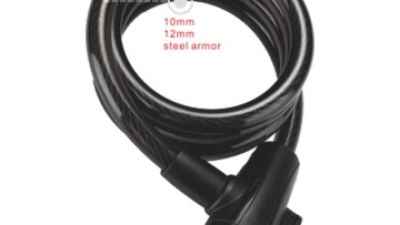
Nurbo Black Steel Cable Spiral Lock: Reliable Security for Bicycles and Motorcycles

A reliable lock is an essential accessory for protecting bicycles and motorcycles during daily travel, commuting, or outdoor activities. This Black Steel Cable spiral lock combines a zinc alloy lock cylinder, durable ABS case, and flexible PVC-coated wire rope to provide dependable security with convenient handling. Available in 10 mm or 12 mm diameters and a 1000 mm length, it offers enough reach for securing a vehicle to a suitable fixed object.

Designed for practical everyday use, the lock includes two brass keys and a dust cover that helps protect the keyhole from dirt and moisture. Its self-coiling design makes storage simple, while the included mounting bracket allows the lock to stay neatly attached to a bicycle or motorcycle when not in use. The protective PVC coating helps reduce scratches on painted surfaces and adds resistance against rust and changing weather conditions. Lightweight, easy to carry, and simple to operate, it is suitable for securing bicycles, motorcycles, scooters, gates, luggage, and other personal belongings in a variety of situations.

FAQS

How important is a bike lock’s security rating?

It helps compare locks tested under the same standard. It is not a magic shield. Check independent testing and cutting, pulling, and drilling results.

Which lock material usually offers the best balance?

Hardened steel often balances strength and manageable weight. Boron-alloy steel may improve hardness. Material names alone prove little. Check the shackle diameter and lock body protection.

Are cable locks suitable for every parking situation?

Cable locks are flexible and easy to carry. They usually provide less cutting resistance. Use them for short, low-risk stops. Long parking needs stronger protection.

How should I choose the correct lock size?

Measure your frame, wheel, and fixed parking object together. The lock should fit with limited empty space. Too much room can reduce security. Measure twice.

Is a heavier lock always better?

Not necessarily. A heavy chain may become exhausting on hills or trains. You may leave it at home. A lighter lock carried consistently can be more useful.

Which lock types are easiest to carry daily?

Compact U-locks can fit inside small frame bags. Folding locks often balance portability and protection. Choose one that stays stable during rough rides. Rattling becomes annoying quickly.

What weather features should I look for?

Choose corrosion-resistant finishes and sealed keyways. The mechanism should still turn after a wet week. A covered keyway can help protect internal parts. Small details matter.

How can I avoid buying a lock that works poorly in practice?

Check the usable interior length, not only total length. Try carrying it during a full commute. Make sure it reaches the rack comfortably. I once ignored frame space. Big mistake.

Conclusion

Choosing a Cycle Bike Lock in 2026 means balancing security, convenience, and long-term value. Start by considering the risks your bicycle may face, including cutting, prying, and forced leverage, then select a lock type that suits your riding routine. Folding locks, chain locks, U-locks, and compact cable options each provide different levels of protection, flexibility, and portability. A daily commuter may prefer a practical balance of weight and strength, while a high-value bicycle used in urban areas may require a heavier, more resistant design.

Pay attention to independent security ratings, hardened materials, corrosion resistance, and the lock’s size. It should be large enough to secure the frame and wheel to a fixed object without leaving excessive space for tools. Smart features such as tamper alerts, tracking support, and app-based access can add convenience, but they should complement—not replace—strong physical protection. Finally, compare the purchase price with maintenance requirements, battery needs, warranty coverage, and expected service life to choose a dependable lock that offers lasting value.
Sophia

Sophia

Sophia is a dedicated marketing professional at Wenzhou Naibao Lock Industry Co., Ltd., where she leverages her in-depth knowledge of the company's innovative lock products to enhance brand visibility and customer engagement. With a strong focus on quality and security, Sophia plays a pivotal role......
Previous What Is a Chain Cycle Lock and How Does It Work?