Choosing a reliable China Bike Lock manufacturer requires more than comparing prices on a supplier platform. A dependable evaluation examines design, materials, production control, testing, and communication. The best manufacturer should explain how its Bike Lock resists cutting, twisting, corrosion, and repeated daily use. It should also provide clear samples, factory photographs, test records, and product specifications.
Look closely at the details. A hardened steel shackle should have a consistent surface finish. A combination mechanism should turn smoothly after dust and moisture exposure. Packaging should protect the lock without creating unnecessary waste. Ask whether the factory performs incoming material inspections and final function checks. Independent testing can add confidence, especially for large retail orders. However, certificates alone are not enough. A document cannot replace a physical sample.
Talk to the production team.
A professional supplier should answer practical questions about minimum order quantities, tooling, lead times, spare keys, warranty handling, and customization. Reliable factories usually explain problems before they become expensive. This matters when developing a private-label product or importing several lock models. The phrase “Bike Lock Bike Lock” may appear in online searches, but repeated keywords do not prove product quality.
Real selection takes patient comparison. A low quotation may hide weaker steel, unstable plating, or limited inspection. An expensive offer may still lack useful support. Review the sample yourself, test it outdoors, and record every weakness. No manufacturer is perfect. That is the uncomfortable part. The right partner is not the one making the biggest promises, but the one showing evidence, accepting questions, and improving after honest feedback.
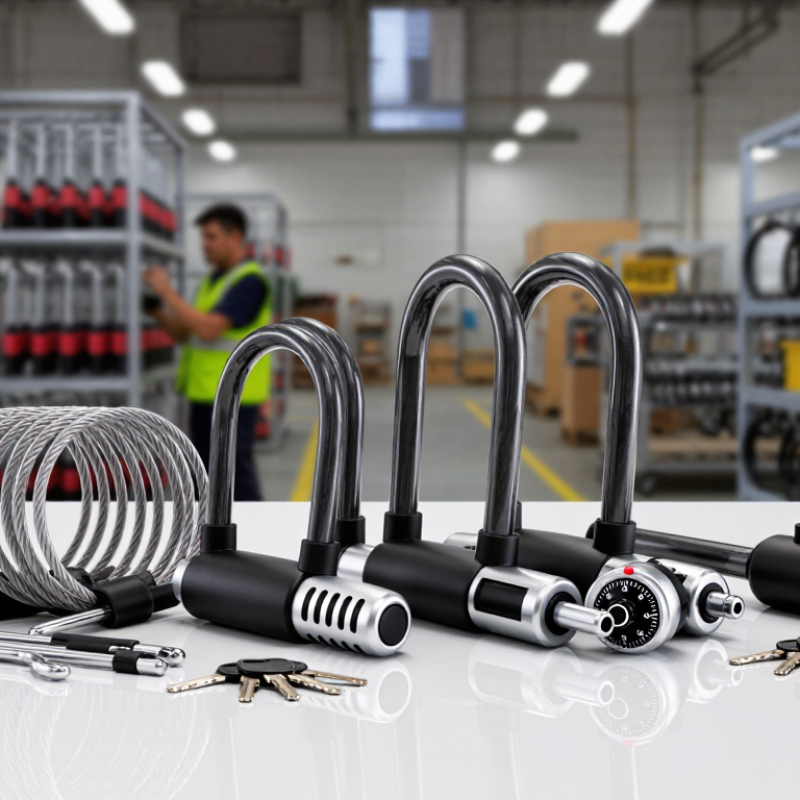
A reliable bike lock manufacturer in China is defined by evidence, not polished photographs. In supplier reviews, I look for stable metal sourcing, controlled heat treatment, and repeatable assembly records. The factory should explain its steel grade, coating thickness, key tolerances, and corrosion testing without vague promises.
Grand View Research valued the global bicycle market at approximately USD 76.67 billion in 2022. It also projects strong growth through 2030. This expanding market increases pressure on manufacturers to deliver consistent security products. Ask for test reports against relevant standards, including EN 15496 where applicable. Check whether reports identify the exact model, test date, laboratory, and sample quantity. A certificate without traceable details is weak evidence.
Tips: Request three production samples from different batches. Measure shackle diameter, locking movement, weight, and coating quality. Ask for factory audit records, incoming inspection data, and corrective-action reports. A dependable supplier should accept reasonable third-party inspection. No factory is flawless. What matters is how clearly it records failures and fixes them. I would also order a small pilot batch before approving large volumes. That step costs time, but it can reveal packaging damage, uneven plating, or inconsistent keys before customers do.
Comparing Chinese bike lock manufacturing capabilities requires more than checking catalog photos. Visit the factory virtually or in person, and inspect its material flow. Ask whether steel cables, hardened shackles, cylinders, and coatings are tested in separate stages. A capable manufacturer should explain thickness tolerances, welding control, corrosion testing, and assembly inspection without vague promises. Request production samples from different batches. One perfect sample proves little.
Pay attention to process evidence. Review incoming-material records, in-process inspection sheets, and final testing data. Ask how the factory tracks cylinder alignment, key consistency, coating adhesion, and lock resistance under repeated use. For a China Bike Lock Bike Lock project, also compare prototype speed, tooling control, packaging accuracy, and response to design changes. Reliable teams usually identify risks before production begins. That matters.
Tips: Request a small pilot order. Test locks outdoors, near moisture, dust, and temperature changes. Check whether keys turn smoothly after repeated cycles. Ask for independent test reports when available. Confirm the factory can maintain the same quality after volume increases. I have seen promising samples fail because finishing control was weak. That experience is easy to overlook. Do not judge capability by equipment alone; disciplined inspection and honest communication often reveal more.
Chinese manufacturers can produce several bike-lock types for different riding conditions. Common options include U-locks, cable locks, chain locks, folding locks, frame locks, and disc-brake alarm locks. Many factories also develop smart locks with Bluetooth control, motion alarms, and rechargeable batteries. According to Grand View Research, the global bicycle market was estimated at about US$70 billion in 2022, with continued growth expected through 2030. This expanding market creates demand for lighter, stronger, and more adaptable security products.
Material selection changes the user experience. Hardened steel shackles resist cutting, while woven steel cables offer flexibility but usually provide less resistance. Folding locks save space inside a small frame bag. Chain locks suit cargo bikes and urban parking, although their weight can become annoying during long rides. Chinese OEM and ODM factories can customize cylinder types, key systems, mounting brackets, colors, packaging, and alarm modules. An OEM Bike Lock Bike Lockproject should include sample testing, salt-spray checks, pull-force tests, and cycle testing before mass production. EN 15496 provides useful testing guidance for biCycle Locks.
Tips: Ask for test records, not only factory photographs. Check the locking mechanism with cold hands and gloves. A heavier lock is not always better. In practical use, I have seen a strong chain remain unused because riders disliked carrying it. Specify the target bicycle, parking time, weather exposure, and retail price before choosing a design. Some smart features look impressive, but weak battery management can make them unreliable.
Chinese bicycle lock manufacturers commonly produce cable, chain, U-lock, folding, and frame locks. The chart compares representative product weights based on typical market specifications: cable locks are lightweight for everyday use, while chain and U-lock designs generally use more steel and provide higher resistance to cutting and leverage attacks.
China Top Bike Lock Manufacturers: How to Choose?
Material quality should be your first practical check. A hardened steel shackle resists cutting better than ordinary mild steel. However, hardness alone does not prove security. Inspect the lock body, internal cylinder, and connecting points. Weak rivets can defeat a strong shackle. For outdoor use, choose corrosion-resistant finishes and sealed keyways. Test the key movement with cold, dry hands. Small details matter. A heavy lock may feel reassuring, yet weight can hide poor design. That is an easy mistake to make.
Tips: Ask manufacturers for material specifications, laboratory test reports, and production inspection records. Check whether testing covers cutting, pulling, drilling, corrosion, and freezing conditions. Certificates should show the issuing body, test standard, product model, and valid date. Do not trust a certificate image alone. Contact the testing organization when details seem unclear.
Security standards provide useful comparison, but their names can confuse buyers. Confirm the exact resistance level and test method, not just a printed badge. Independent certification is more reliable when the laboratory has recognized competence and clear traceability. Also compare samples from different production batches. Manufacturing variation happens. A lock that passes one test may still have rough machining or inconsistent coating. Ask for warranty terms, replacement support, and inspection frequency. Reliable manufacturers explain weaknesses instead of promising absolute protection. That honesty is worth evaluating.
| Evaluation Dimension | Common Options or Requirement | What to Check in Technical Documents | Security and Practical Value | Recommended Assessment |
|---|---|---|---|---|
| Lock Type | U-lock, chain lock, folding lock, cable lock, or frame lock | Construction drawings, locking mechanism, effective locking length, and intended use | U-locks generally offer strong resistance to cutting and leverage attacks. Chain and folding locks can provide greater flexibility. Cable locks are convenient but are usually more vulnerable to cutting. | Match the type to the bicycle, location, and required security level |
| Shackle or Chain Material | Hardened alloy steel, hardened carbon steel, or case-hardened steel | Steel grade, heat-treatment method, hardness range, shackle diameter, and metallographic inspection records | Hardened steel can improve resistance to hacksaws, bolt cutters, and some forms of attack. Material quality and heat treatment must be evaluated together. | Prefer documented steel composition and heat-treatment control |
| Cable Material | Stranded steel cable with a protective polymer coating | Cable diameter, strand construction, tensile strength, coating thickness, and corrosion resistance | A thicker cable can improve basic resistance, but cable locks are generally intended for lower-risk or secondary-security applications. | Use as a secondary lock or for short-duration parking |
| Folding Link Construction | Hardened steel plates connected by rivets or protected joints | Plate thickness, rivet design, joint protection, folding length, and resistance-to-tampering test results | Protected joints and robust rivets reduce attack points. The folding design should not create excessive play or exposed gaps. | Inspect both link strength and joint security |
| Locking Cylinder | Disc-detainer, pin-tumbler, or other mechanical cylinder | Resistance to picking, drilling, pulling, impressioning, and unauthorized key duplication | A strong shackle can still be compromised if the cylinder housing is weak. The cylinder should be shielded from direct attack where possible. | Require independent cylinder-security test evidence |
| Key Control | Standard keys, restricted-profile keys, or coded replacement-key systems | Key registration process, replacement-key controls, duplication restrictions, and key-retention performance | Controlled key duplication can reduce the risk of unauthorized copies and improve after-sales service. | Select a documented key-management process |
| Anti-Drill and Anti-Pry Features | Hardened inserts, rotating sleeves, shielded cylinders, and tight shackle openings | Design drawings, attack-test procedures, and evidence of resistance to drilling, twisting, and leverage | These features can delay common attacks, especially when the lock body and shackle are designed as one integrated security system. | Check protection of both the cylinder and lock body |
| Corrosion Resistance | Protective coating, stainless-steel components, sealed cylinder, and drainage design | Salt-spray test method and duration, coating thickness, functional testing after exposure, and environmental-use limitations | Corrosion can cause jamming, spring failure, or reduced structural performance. Outdoor locks require more than visual rust protection. | Request test conditions and post-test functionality results |
| Weather and Temperature Performance | Rain, dust, freezing temperatures, heat, and ultraviolet exposure | Operating-temperature range, ingress protection claims where applicable, lubricant specifications, and freeze-resistance testing | Reliable operation is essential for daily use. A lock that resists attack but cannot open in bad weather is not fit for purpose. | Verify performance under the target climate conditions |
| Security Certification | Independent schemes such as Sold Secure or ART, where the product has actually been tested and listed | Exact product model, certificate or listing number, security level, validity, test scope, and certification holder | Independent certification provides stronger evidence than an unverified “high-security” claim. Certification must apply to the exact model being purchased. | Verify the certificate directly with the certification organization |
| European Product Standards | EN 12320 may be relevant to certain padlocks and padlock assemblies | Declared scope, applicable grade, test report, laboratory identity, and whether the bicycle lock configuration falls within the standard | EN 12320 addresses performance requirements and test methods for padlocks and padlock assemblies. It should not automatically be treated as a universal bicycle-lock certification. | Confirm scope before comparing compliance claims |
| General Laboratory Testing | Cutting, tensile, impact, twisting, pulling, picking, drilling, corrosion, and cycle testing | Test sample identification, test equipment, acceptance criteria, laboratory competence, and complete test results | Repeatable testing helps compare products, but laboratory reports are meaningful only when the methods and acceptance criteria are clearly stated. | Prefer traceable reports from competent independent laboratories |
| Manufacturing Quality Control | Incoming-material inspection, heat-treatment control, dimensional inspection, assembly checks, and final functional testing | Quality-control plan, sampling method, calibration records, nonconformity procedure, and batch traceability | Consistent production is necessary to ensure that tested samples represent regular production rather than a special prototype batch. | Request batch-level quality records and traceability |
| Safety and Chemical Compliance | Applicable restrictions on hazardous substances and market-specific product requirements | Material declarations, restricted-substance test reports, packaging information, and destination-market compliance documents | Compliance requirements vary by sales destination. They support legal market access but do not by themselves prove resistance to theft. | Separate regulatory compliance from security certification |
| Usability and Installation | One-handed operation, carrying bracket, mounting compatibility, key access, and locking-space efficiency | Product dimensions, weight, mounting instructions, bicycle-frame compatibility, and user instructions | Convenient locks are more likely to be used correctly. The lock should secure the frame and wheel to a fixed object without excessive slack. | Evaluate real-world use, not only laboratory strength |
| Supplier Evaluation | Production capability, engineering support, inspection capacity, and after-sales service | Factory audit results, quality certificates, production capacity, complaint records, spare-part support, and corrective-action process | A reliable supplier should be able to reproduce quality, control changes, and resolve defects throughout the product life cycle. | Use an audit and sample-approval process before bulk purchasing |
Note: Security ratings, certificates, and standards are not interchangeable. Always verify the exact product model, test scope, issuing organization, validity, and market applicability before making a purchasing decision.
When choosing a China bike lock manufacturer, inspect customization beyond colors and logos. Ask whether engineers can adjust shackle diameter, cylinder design, mounting brackets, and packaging. A capable supplier should provide drawings, material options, and a sample approval process. For a Custom Bike Lock Bike Lock, confirm who owns the tooling and design files. Small details matter.
Quality control must be visible, not just promised. Request records for tensile strength, corrosion resistance, key-cycle testing, and lock-opening consistency. During a factory visit, check whether inspectors measure incoming steel and test finished locks separately. Watch the production line. Are rejected parts clearly marked? A polished sample can mislead. I once saw a lock pass appearance checks but fail after repeated cycling. That gap changed my audit checklist.
Tips: Compare three production samples, not one. Ask for batch inspection photos, test frequencies, and corrective-action reports. Review the factory’s monthly capacity against your forecast, especially before seasonal demand. Confirm equipment, worker shifts, storage space, and realistic lead times. Capacity claims need evidence. A supplier making 50,000 units monthly may struggle with a customized mold or new coating. Leave room for delays, because even reliable factories sometimes underestimate adjustment time.
When comparing Chinese bike lock manufacturers, verify pricing beyond the unit cost. Request an itemized quotation with materials, packaging, tooling, minimum order quantity, and payment terms. Confirm whether the price includes export packaging and shipping under the stated Incoterm. Ask for a dated sample before placing a large order. A reliable manufacturer should explain price changes clearly, especially when steel or zinc costs move.
Communication reveals practical experience. Send the same technical questions to several factories. Compare response speed, accuracy, and willingness to share test reports, drawings, and production photos. Ask who will manage quality checks and handle design changes. I once focused too heavily on a low quotation. The replies were vague, and the final details became expensive. That mistake still matters.
Tips: Request a video call from the production floor. Check whether the speaker understands locking mechanisms, corrosion protection, key tolerances, and packaging damage risks. For export service, verify commercial invoices, packing lists, certificates, carton markings, and shipping schedules. Confirm the factory can coordinate inspections and provide realistic lead times. Do not accept “ready to ship” without evidence. Small contradictions deserve attention. A dependable supplier may admit limits, correct errors, and document each commitment in writing.
Choosing the right China bike lock manufacturer requires more than comparing prices. For buyers typing “Wholesale Bike Lock Bike Lock,” the first check should be product consistency. Ask about steel grade, cylinder structure, coating thickness, and resistance testing. A reliable factory should provide clear specifications, sample photos, and recent test records. Vague answers are a warning sign.
Request samples before placing a large order. Test them outdoors, not only on a clean showroom table. Check whether the key turns smoothly after rain exposure. Inspect welds, plastic edges, cable flexibility, and locking noise. Small defects often appear during repeated use. Packaging also matters because scratched locks create avoidable claims.
Factory experience is easier to judge through production evidence. Ask for quality-control steps, inspection reports, batch traceability, and realistic lead times. Video calls can reveal whether the workshop matches its stated capacity. Communication deserves equal attention. Can the team explain tolerances clearly? Can they handle a design change without confusion?
I once focused too heavily on unit price and overlooked carton strength. That mistake caused extra handling work. A lower quote is not always lower cost. Leave room for sample revisions, independent checks, and honest feedback before confirming production.
Cycling is becoming an increasingly practical choice for commuting, exercise, and short-distance travel. The World Health Organization’s *Global Status Report on Physical Activity 2022* estimates that nearly 1.8 billion adults worldwide do not meet recommended activity levels, highlighting the value of making everyday movement more accessible. As more riders use bicycles, scooters, and motorcycles for regular transportation, dependable protection against opportunistic theft becomes an essential part of responsible ownership.
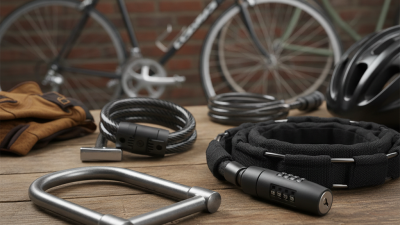
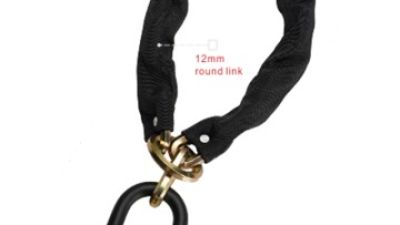
Designed for convenient everyday security, this chain lock combines a heavy-duty hardened steel chain with a scratch-resistant polyester cover that helps protect both the lock and the vehicle’s finish. Measuring 12 × 12 × 1,000 or 1,500 mm, it offers flexible reach for securing a bicycle to a rack, gate, fence, or other fixed structure. The detachable mini U-bar padlock can be used independently, creating more options when locking different components or working in tight spaces. A steel body with an ABS case supports durability while keeping the design practical and easy to handle.
Two brass keys are included for straightforward operation without complicated setup. The lock’s multi-purpose construction suits bicycles, motorcycles, scooters, doors, gates, and fences, while the fabric coating helps reduce scratches and exposure to rust. Its combination of chain flexibility, detachable locking functionality, and portable design makes daily security simpler for riders and households.
Inspect material flow, production stages, and quality records. Ask about steel, hardened shackles, cylinders, coatings, welding, and assembly. A clean workshop helps, but it proves little alone.
One excellent sample may hide inconsistent production. Compare samples from separate batches for finish, key movement, weld quality, and cable flexibility. Samples can mislead.
Request incoming-material records, in-process inspection sheets, and final testing data. Check cylinder alignment, coating adhesion, key consistency, and repeated-use resistance. Missing records deserve careful questioning.
Start with a small pilot order. Test locks outdoors near moisture, dust, and changing temperatures. Turn each key repeatedly and inspect scratches, noise, and rough movement. A showroom test is not enough.
Confirm steel grade, cable or shackle thickness, cylinder structure, and coating thickness. Ask for stated tolerances and corrosion-testing methods. Vague specifications create avoidable quality disputes.
Ask how the factory maintains quality after output increases. Review batch traceability, inspection frequency, and realistic production capacity. A factory may perform well at low volume, then struggle later.
Weak cartons can cause scratches, bent parts, and extra handling work. Check packaging accuracy, carton strength, tooling control, and assembly fit. The cheapest quote is not always the cheapest result.
Ask whether the team explains tolerances clearly and records design changes. A capable team identifies risks before production begins. Still, communication can fail under pressure. Leave time for revisions and independent checks.
Choosing a reliable China Bike Lock manufacturer requires more than comparing prices. Buyers should examine the supplier’s production experience, engineering capabilities, and ability to manufacture different lock types, such as cable, chain, folding, U-lock, and smart locking solutions. Material quality is equally important, including the strength of steel, corrosion resistance, cylinder durability, and protection against common tampering methods. Manufacturers should also provide clear information about testing procedures, applicable security standards, and relevant certifications.
A successful partnership depends on consistent quality control, stable production capacity, flexible customization, and accurate delivery schedules. Buyers should review samples, inspect factory processes, confirm packaging requirements, and evaluate whether the supplier can support private designs or functional improvements. Transparent quotations, responsive communication, export experience, and dependable after-sales service are also essential. By assessing these factors together, companies can select a manufacturer that offers secure products, reliable performance, competitive value, and long-term cooperation.