Leave Your Message
0%

These days, picking the right Lock Motorbike manufacturer isn’t just about price tags and how thick the steel is. With motorcycle ownership growing around the world, there’s a steady need for security gear you can actually rely on. And as the International Motorcycle Manufacturers Association points out, motorcycles play a pretty big role in urban transport and everyday mobility. Meanwhile, Grand View Research figures the global smart locks market hit around USD 2.57 billion in 2023 — and it’s looking at pretty strong growth through 2030. And honestly, that shift matters. Riders are increasingly expecting mechanical strength, connected alerts, and practical installation, all wrapped into one security system.

So this guide takes a look at some of the big names that sell to riders and buyers around the world — ABUS, Kryptonite, Oxford Products, Hiplok, and GIVI. It digs into things like hardened materials, how the locking mechanism actually works, weather resistance, portability, warranty support, and what independent testing has shown. Sure, product specs can look great on a screen. But out on a wet roadside or in a packed parking area? Real life can be a whole different story. And honestly, that gap is worth paying attention to.

Worth noting, the analysis also pulls in market research from Grand View Research and Statista, plus industry info published by the Motorcycle Industry Council. These sources are definitely helpful for getting a sense of direction, though they don't exactly make every ranking 100% objective. Some manufacturers share detailed testing standards; others? Not so much—they give you fewer measurable results. So if you're a buyer, it's smart to double-check certifications, key replacement policies, what regional service coverage looks like, and whether the part actually fits your motorcycle frame. Honestly, a strong lock is just one piece of the risk-management puzzle. How you anchor it matters just as much.

And no one product is going to be perfect for every rider.

This 2026 overview is my attempt to sort out what's actually solid engineering from what's just slick marketing. I'm looking at the evidence, what ownership is really like over time, and what buying conditions look like around the world. The final ranking might still need some second thoughts—because, let's be real, security performance is tough to compare when no two real-world setups are ever exactly the same.
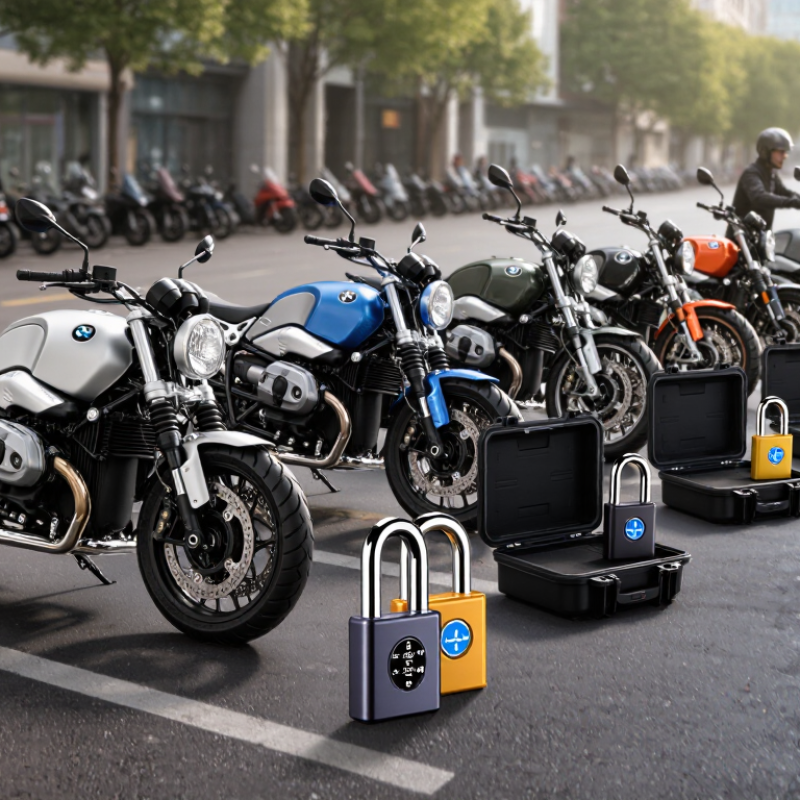
2026 Top Lock Motorbike Manufacturers for Global Buyers

Motorcycle Lock Types and Security Standards: EN 12320, ART, and Sold Secure

2026 Top Lock Motorbike Manufacturers for Global Buyers

MotorCycle Lock Types and Security Standards: EN 12320, ART, and Sold Secure

Motorcycle theft remains a serious purchasing concern. The UK Office for National Statistics recorded about 130,000 vehicle thefts in the year ending March 2024. That figure covers all vehicle types, not motorcycles alone, but it shows the scale of the risk.

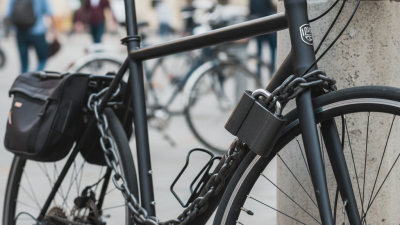
Choose the lock around the parking environment. A hardened chain resists cutting, while a disc lock helps prevent wheel rotation. A ground anchor can add meaningful delay. Small details matter. Check the shackle diameter, locking mechanism, and corrosion protection.

EN 12320 grades padlocks from 1 to 6, covering security performance and durability. Higher grades usually indicate stronger resistance, but this standard does not automatically certify every chain or motorcycle lock component. ART uses a star rating system, generally from one to five stars, after testing against practical attack methods. Sold Secure classifications, such as Motorcycle Gold or Diamond, also reflect resistance testing and product category requirements.

Certificates help buyers compare products, but they are not magic. A highly rated lock can still fail when used with a weak chain or poorly positioned anchor. I would inspect the full security setup, not only the label. Standards also differ between countries, so importers should verify the current test scope, certificate validity, and local insurance requirements before placing large orders.

2026 Top Lock Motorbike Manufacturers for Global Buyers

Motorcycle Lock Types and Security Standards: EN 12320, ART, and Sold Secure

This chart compares the number of levels in three recognized security frameworks: EN 12320 padlock grades 1–6, ART star levels 1–5, and Sold Secure categories Bronze, Silver, Gold, and Diamond. The figures show the number of published levels, not a direct strength score. Buyers should verify certification for the complete lock assembly and select a motorcycle-specific product where available.

How Global Buyers Should Assess Tensile Strength, Chain Diameter, and Lock Weight

Global buyers comparing 2026 motorBike Lock manufacturers should treat tensile strength as measured evidence, not advertising language. Ask whether the figure describes ultimate failure strength or a working load. Those values are not interchangeable. Request laboratory methods, sample size, and test direction. In practical inspections, I look for a report matching the exact chain, links, and lock body supplied. Generic certificates can hide important differences.

Chain diameter gives useful context, but steel quality, heat treatment, and link geometry also matter. A 12-millimeter chain may resist cutting better than a thinner chain, yet poor welds remain a weakness. Check weld consistency under bright light. Measure several links with calipers, not one convenient section. For a Motorbike Chain And Lock, inspect shackle clearance and keyway protection too. Small gaps can accept leverage tools. Manufacturers should disclose steel grade, coating process, and corrosion-test conditions. Salt spray hours alone can mislead.

Lock weight affects portability, mounting choices, and shipping cost. More mass may discourage handling, but it does not prove stronger construction. During sample reviews, I carry the lock for several minutes and test its balance on the motorcycle. An awkward design may stay at home. That is a practical failure. Ask for batch traceability, replacement procedures, and independent inspection access. Some evaluations remain incomplete; I would revisit them after rain exposure and repeated locking cycles.

ABUS, Kryptonite, Oxford, and Squire: Comparing 2026 Product Portfolios

Global demand for motorcycle security is expanding with two-wheel ownership. Fortune Business Insights valued the global motorcycle market at about USD 135.70 billion in 2023 and projects strong growth through 2030. That matters for buyers. More motorcycles create more varied security needs.

The four leading portfolios differ by use case. One German specialist emphasizes compact disc locks, alarmed devices, and folding systems for daily parking.

A US-focused competitor offers recognizable hardened chains and U-locks, often suited to street anchoring.

A British commuter brand covers practical disc locks, cable combinations, and weather-resistant chains.

Another UK manufacturer concentrates on heavyweight chains, padlocks, and ground anchors for garages or fleet yards.

The comparison is not perfectly equal. Product names, security ratings, and regional availability change frequently.

Independent testing should guide the purchase. Sold Secure’s motorcycle classifications distinguish resistance levels, while ART certification evaluates lock performance under controlled testing. These labels help, but they do not measure every real parking condition.

A 16-millimeter chain may resist cutting better than a thin cable, yet it can be too heavy for a small scooter. The 2023 Police Scotland motorcycle theft guidance also stresses layered protection, including secure anchors and visible locking points.

My practical view is simple: check the lock’s tested rating, weight, key replacement policy, and clearance around the wheel. Small details matter. Even strong products fail when owners leave slack chain on the ground.

ART 4–5 Star and Sold Secure Diamond Ratings Across Leading Manufacturers

For global buyers comparing 2026 motorbike security products, ART 4–5 Star and Sold Secure Diamond ratings offer useful evidence. These ratings apply to specific lock models, not entire manufacturers. A responsible buyer should check the current certificate, testing scope, and product code before ordering.

A Chain Lock For Motorbike use should feel substantial without becoming impossible to carry. During practical checks, examine chain thickness, link welding, sleeve durability, and lock-cylinder protection. A Diamond-rated model may resist severe tool attacks, but no lock is completely invulnerable. That matters.

ART testing and Sold Secure testing use different systems, so their ratings should not be treated as identical. Strong products often combine hardened steel, protected mechanisms, and carefully designed anti-drill features. Look for clear test documentation from the manufacturer, not only sales language. Check the locking point too. A heavy chain attached to a weak anchor can reduce real-world security. Rain, road dust, and repeated movement may also affect performance over time. I would prefer a slightly heavier certified lock with a usable key system, rather than an impressive rating that stays at home. Product availability, replacement keys, warranty terms, and regional certification recognition deserve equal attention. Ratings guide a purchase, but daily handling reveals the uncomfortable weaknesses.

Weather Resistance Testing: IP Ratings, Corrosion Control, and ISO 9227

For global buyers, weather resistance starts with a precise test request. A Chain Lock Motorbike product should declare its IP rating under IEC 60529. IP65 means dust protection and resistance to water jets. IP67 adds temporary immersion protection. However, an IP code may cover only an electronic housing. It may not protect the keyway, chain joints, or locking cylinder. Ask for the tested assembly, not just the control module.

Corrosion deserves equal attention. The NACE IMPACT study estimated global corrosion costs at about 3.4% of worldwide GDP, or US$2.5 trillion annually. ISO 9227 salt-spray testing helps compare coatings, plating, and exposed steel surfaces. Yet salt fog is not a complete forecast of outdoor service life. Road grit, humidity cycles, and trapped water create different damage patterns. A 500-hour result can look impressive, but it needs context. Test duration alone can mislead.

Tips: Request the ISO 9227 method, test duration, substrate, and failure criteria. Inspect welds, drain holes, and coating edges. Use a sample after rain exposure. Wipe it carefully, then check rust around the clasp. Small details matter. Buyers should also verify independent laboratory records and production consistency. A strong prototype can still hide weak batch control. I would not treat one certificate as final proof. Weather testing is useful, but real roads remain less predictable.

Regional Compliance, Warranty Terms, and Distribution Data for 2026 Buyers

For 2026 buyers, selecting a Motorbike Lock means checking regional compliance before comparing prices. Requirements may differ for materials, packaging, product labels, and electronic components. Ask suppliers for current test reports, traceable batch records, and importer-ready documentation. Do not rely on a generic certificate. It may not cover your destination market.

Warranty language deserves equal attention. Confirm coverage length, excluded damage, replacement procedures, and response times. A clear warranty should explain whether shipping costs are shared. Some suppliers offer twelve months, while others provide longer coverage for specific components. Request written definitions for corrosion, failed locking mechanisms, and lost keys. These details prevent disputes after installation. I have seen attractive offers weaken when replacement parts were unavailable.

Tips: Request rolling distribution data from the previous twelve months. Review average lead time, stock availability, order fill rate, and regional warehouse coverage. A supplier reporting 95% fulfillment may still struggle during seasonal demand. Ask for figures by market, not global averages. Check carton dimensions and pallet quantities before approving an order. Small packaging errors can raise freight costs quickly. Keep one sample for local testing, even when documents look complete. Paperwork can miss real handling problems.

FAQS

What does an IP65 rating usually protect?

IP65 indicates dust protection and resistance to water jets. It may cover only the electronic housing. Check the keyway, chain joints, and locking cylinder separately.

Is IP67 always better for outdoor security equipment?

IP67 adds temporary immersion protection. However, the rating may not cover the complete assembly. Ask which parts were tested.

What information should buyers request for IP testing?

Request the IEC 60529 test standard, tested parts, test conditions, and report date. A module-only report can create false confidence.

Why is corrosion testing important?

Corrosion can damage exposed steel, welds, coating edges, and clasp areas. Salt-spray testing helps compare materials and surface treatments.Small areas matter.

Does a 500-hour salt-spray result predict outdoor service life?

Not completely. ISO 9227 results need details about the method, substrate, duration, and failure criteria. Road grit and trapped water behave differently.

How can buyers inspect a sample after rain exposure?

Let the sample face rain, then wipe it carefully. Check rust near the clasp, drain holes, welds, and coating edges. This simple check can reveal weaknesses.

What documents should buyers verify before regional purchasing?

Request current test reports, traceable batch records, labels, packaging details, and importer-ready documents. Confirm that each document covers the destination market.Generic certificates may mislead.

What warranty details deserve careful review?

Check coverage length, exclusions, replacement steps, response times, and shipping responsibility. Ask for written definitions of corrosion, failed mechanisms, and lost keys.

How should buyers assess distribution reliability?

Request the previous twelve months of lead time, stock, order fill rate, and warehouse data. Review figures by market, not only global averages.

Why should buyers keep a local sample?

Local testing can expose handling, packaging, or installation problems. Check carton dimensions and pallet quantities before ordering. I would not trust paperwork alone.

Conclusion

Choosing the right Lock Motorbike solution in 2026 requires more than comparing price or appearance. Global buyers should understand common security classifications, including EN 12320, ART, and Sold Secure, while carefully evaluating tensile strength, chain diameter, shackle design, and overall lock weight. Higher ART and Sold Secure ratings can indicate stronger resistance in controlled testing, but buyers should also match the product to their motorcycle, storage conditions, and daily transport needs.

Long-term performance is equally important. Weather-resistance information, IP ratings, corrosion-control measures, and ISO 9227 salt-spray testing can help assess suitability for humid, coastal, or rainy environments. Buyers should also review regional compliance requirements, warranty coverage, replacement policies, distribution reliability, and after-sales support. By comparing these technical, environmental, and commercial factors together, purchasers can select dependable motorcycle security equipment that offers balanced protection, practical handling, and consistent value across different markets.
Amelia

Amelia

Amelia is a dedicated marketing professional at Wenzhou Naibao Lock Industry Co., Ltd., where she leverages her extensive knowledge of the company's product line to drive engagement and awareness. With a deep understanding of the locksmithing industry, she produces high-quality, informative blog......
Previous China Top Bike Lock Manufacturers How to Choose?