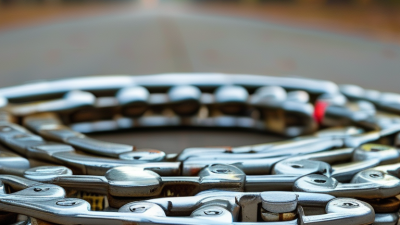
Choosing a bike lock might seem pretty straightforward at first—just pick one, right? But then you start comparing stuff like chain thickness, lock mechanisms, coatings, and how much it weighs to carry around. This guide is here to help clear things up. We’re focusing on the top 10 types of Lock Bike Chains for folks around the globe, highlighting practical differences instead of falling for fancy advertising pitches. Think about it—if your bike’s outside a busy train station, it’ll face rain, dust, lots of movement, and limited locking space, so your lock needs to hold up against all that.
When picking a lock, I consider things like hardened steel links, how the cylinder lock works, protective sleeves to avoid scratching your bike, resistance to rust, flexibility, and ease of everyday handling. We also look into different lock types—key locks, combination locks, folding chains, built-in mechanisms, and compact models perfect for travel. Each type is better suited for certain situations. For example, a commuter might prefer a lightweight chain lock chain, while someone with a cargo bike might need something longer with stronger links. Fit really does matter.
Honestly, real-world experience is gold. It can point out stuff that product descriptions often miss. Sure, a thicker chain gives you better security, but it might be awkward to carry on your shoulder. A smooth sleeve can stop your frame from getting scratched—unless it traps moisture after a wet ride. And while Combo Locks are handy—no keys to lose—they can be a pain if you forget your code. I’ve noticed that security ratings aren’t always consistent across different markets, so it’s a good idea to double-check test methods, warranties, materials, and supplier info before you buy.
My goal here is to help you make smarter choices—whether you’re a shop owner, distributor, fleet manager, or just someone looking to keep their bike safe. But remember, no lock is foolproof. The best security still relies on smart parking habits, choosing visible spots, and regularly checking your bike. Tiny routines like that matter a lot. Up ahead, I’ll walk you through these ten lock bike chain types—they each shine in certain situations, may fall short in others, and deserve a closer look before you go global with your purchase.
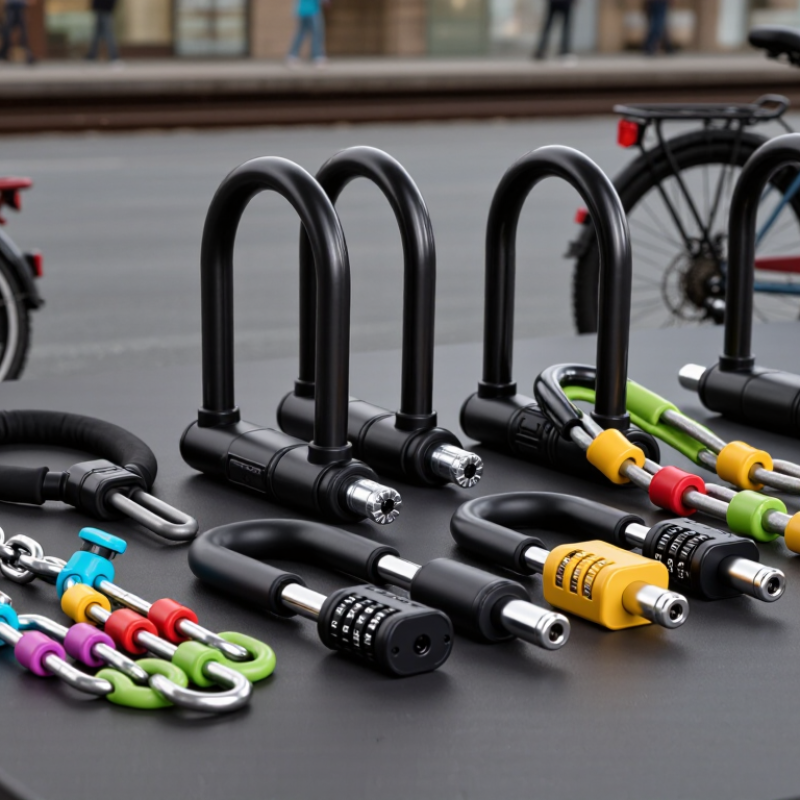
What Makes a Bike Chain Lock Secure and Practical
Top 10 Types of Lock Bike Chains for Global Buyers
A secure bike chain lock balances resistance, weight, handling, and daily convenience. The UK Office for National Statistics estimated 77,000 bicycle theft incidents in England and Wales during the year ending March 2023. That figure shows the risk remains practical, not theoretical. A strong chain should use hardened steel links, a protected locking cylinder, and a design that resists cutting and leverage. EN 15496 also provides technical guidance for bicycle locks, including security and durability testing. Buyers should check the actual rating, not only impressive marketing language.
A thicker chain usually improves resistance, but it adds weight quickly. A 10-millimetre chain may feel manageable around town, while a 14-millimetre version can become tiring on stairs. Length matters too. It should reach a fixed rack and the frame, preferably through a wheel. The China Chain Lock Chain market offers many sizes and finishes, but quality can vary between similar-looking products. I have found that a smooth sleeve prevents paint damage, yet sleeves can hide rust or weak links. That detail deserves inspection.
Tips: Choose a lock with a replaceable key option, sealed keyway, and clear security rating. Test its weight before commuting. Store it dry. Check links, rivets, and the cylinder every month. No lock is perfect. My own buying mistake was trusting thickness alone; portability often decides whether the lock gets used.
Top 10 Types of Bike Chain Locks for Global Buyers
Chain diameter is a practical comparison point because thicker, hardened links generally provide greater resistance to cutting, while sleeves and compact locking formats improve everyday usability. The values below are representative specifications commonly found across the market and do not represent any specific brand.
Buying insight: Lightweight 5–7 mm chains are easier to carry and suit short urban stops. Chains around 8–10 mm offer a stronger balance of portability and security, while 11–12 mm heavy-duty chains provide higher resistance to cutting but add noticeable weight.
Standard Chain Locks for Everyday Bicycle Security
Standard chain locks remain practical for everyday bicycle security because they fit irregular objects and frame shapes. A hardened steel chain, woven sleeve, and compact lock body create the familiar setup. The sleeve protects paint. It also reduces rattling during a commute.
In daily use, choose a chain long enough to pass through the frame, one wheel, and a fixed parking stand. Keep slack low. A loose chain gives thieves more room to work, while a chain resting on the ground may receive stronger impact. Security professionals generally recommend locking in visible, well-lit locations. Keep the keyway protected from rain when possible. A weather-resistant cylinder helps, but no lock is maintenance-free. I have seen users ignore small rust spots until the key begins to stick. Suitable lock lubricant, applied according to the instructions, can prevent that awkward failure.
Standard chains are heavier than compact cable locks, yet their links usually resist cutting better. That trade-off matters for commuters who leave bicycles outside shops, stations, or offices. Check the chain weight before buying; excessive bulk can discourage regular use. I once selected a chain that felt reassuringly strong, but carried it only twice. That was a poor choice. A slightly lighter model used every day may provide more practical protection than a stronger lock left at home. Inspect links, rivets, and the locking mechanism weekly, especially after wet rides.
Hardened Steel Chain Locks for High-Risk Areas
Top 10 Types of Lock Bike Chains for Global Buyers
Hardened steel chain locks are practical choices for bicycles parked in high-risk areas. Their linked construction resists cutting better than thin cable locks. Square or hexagonal links can make tool access more difficult. A thick protective sleeve also reduces scratches on frames and helps prevent dirt from entering the links. However, greater thickness increases weight. That trade-off matters for commuters carrying the lock every day.
For global buyers, inspect the steel grade, link diameter, lock housing, and corrosion protection. A weather-resistant coating is useful in coastal cities and rainy climates. The locking mechanism should operate smoothly after repeated exposure to dust. For OEM Chain Lock Chain projects, suppliers should provide material reports, load-test records, and consistent dimensional samples. Small differences in link welding can affect security and durability. No chain lock is impossible to defeat, so buyers should match security levels with location, parking time, and bicycle value.
Tips: Choose a chain that reaches a fixed rack without excessive slack. Keep the lock above the ground, where tools have less support. Test the key or combination before outdoor use. Avoid carrying the heaviest model automatically; real protection depends on daily use. My own buying lesson is simple: impressive weight can hide poor finishing and awkward handling. Examine the welds closely.
Wearable Chain Locks for Commuters and Urban Riders
Urban commuters need a lock that protects a bicycle without becoming a burden. Wearable chain locks offer practical flexibility for daily city travel. Their linked steel sections can wrap around poles, railings, and narrow bicycle stands. A textile cover helps prevent scratches on the frame and reduces contact noise.
Common choices include hardened steel chains, lightweight alloy chains, combination locks, and key-operated designs. Hardened steel usually offers stronger resistance, but it adds weight around the waist. Combination systems avoid carrying keys, although forgotten codes can create frustrating delays. A Custom Chain Lock Chain may suit riders who need a specific length, thickness, or carrying style. Measure your usual parking space before ordering. Longer is not always better.
Tips: Wear the chain across your body, not loosely around the neck. Check that the lock reaches both wheels and the frame. Keep the locking head above the ground, where it is harder to handle. Inspect links regularly for rust, stiff movement, or damaged fabric. Test the mechanism before every commute. Small habits matter. I once chose a chain that felt convenient but was too short for older street racks. That mistake changed my buying checklist. Weight, reach, comfort, and locking quality should be judged together, not separately.
Compact Chain Locks for Portability and Quick Stops
Compact chain locks suit cyclists who need quick stops without carrying a heavy security device. A short steel chain can wrap around a parking rail, signpost, or café table leg. Its coiled shape fits inside a jacket pocket or small handlebar bag. That convenience matters during errands, station transfers, and brief city visits.
Different chain lock types offer different handling experiences. Slim-link models reduce weight, while thicker hardened links provide stronger resistance against cutting tools. Fabric sleeves help protect bicycle paint and prevent noisy movement. A combination mechanism removes the need for keys, but forgotten codes create another weakness. Keyed versions are often simpler to inspect before riding. Check the lock body, chain joints, and closing action every time.
For a Wholesale Chain Lock Chain purchase, buyers should examine link diameter, corrosion protection, total length, and packed weight. A compact lock must still reach a fixed object comfortably. Measure the frame and wheel position first. In wet climates, exposed metal may need regular drying and lubrication. I have found that many portable locks feel secure until users choose an unsuitable anchor point. That mistake is easy to overlook. No compact chain is invincible, and portability usually involves a trade-off with maximum security. Clear product specifications, consistent quality checks, and realistic usage guidance make bulk sourcing more reliable.
Top 10 Types of Lock Bike Chains for Global Buyers - Compact Chain Locks for Portability and Quick Stops
| No. | Chain Lock Type | Typical Chain Construction | Common Chain Length | Approx. Weight | Lock Mechanism | Portability | Best Use | Quick-Stop Suitability |
| 1 | Lightweight Mini Chain Lock | Thin hardened-steel links with a protective textile sleeve | 60–90 cm | 0.35–0.70 kg | Key cylinder or compact combination lock | Excellent | Short stops in low-risk areas and securing a wheel to the frame | Excellent |
| 2 | Compact Square-Link Chain Lock | Square-profile hardened-steel links designed to resist cutting and twisting | 85–110 cm | 0.70–1.20 kg | Disc-style key cylinder or combination mechanism | Very Good | Daily urban commuting and medium-risk public parking | Excellent |
| 3 | Long-Loop Chain Lock | Medium-gauge hardened-steel chain with a flexible fabric or vinyl cover | 120–180 cm | 1.10–2.00 kg | Integrated key lock or separate padlock | Good | Locking two bicycles or attaching a bicycle to wider fixed objects | Very Good |
| 4 | Combination Chain Lock | Hardened-steel chain paired with a multi-wheel number mechanism | 75–120 cm | 0.65–1.40 kg | Four- or five-digit resettable combination | Excellent | Users who prefer key-free access for regular short stops | Excellent |
| 5 | Keyed Disc-Cylinder Chain Lock | Thick hardened-steel links with a covered disc-style cylinder | 90–120 cm | 1.00–1.80 kg | Covered disc-cylinder key mechanism | Good | Longer parking periods in busy urban locations | Very Good |
| 6 | Integrated Padlock Chain | Hardened-steel links permanently joined to a compact padlock body | 80–150 cm | 0.90–1.90 kg | Keyed padlock body integrated with the chain | Good | General-purpose bicycle security with simple operation | Very Good |
| 7 | Textile-Sleeved Chain Lock | Steel chain covered with woven polyester or nylon to protect the frame finish | 90–140 cm | 0.80–1.70 kg | Keyed or combination lock head | Very Good | Frequent commuters concerned about paint and frame protection | Excellent |
| 8 | Heavy-Duty Security Chain | Large-diameter hardened-steel links with reinforced protective covering | 100–150 cm | 2.00–4.50 kg | Heavy-duty keyed padlock or security cylinder | Limited | High-risk areas, cargo bicycles, and extended outdoor parking | Good |
| 9 | Frame-Mount Carry Chain Lock | Medium-gauge steel chain supplied with a frame-mounted carrying bracket or bag | 85–120 cm | 0.75–1.50 kg | Keyed or combination locking head | Excellent | Cyclists who need secure, accessible storage while riding | Excellent |
| 10 | Multi-Use Modular Chain Lock | Interlocking steel sections or detachable chain segments for adjustable length | 90–160 cm | 1.00–2.50 kg | Keyed connector, integrated cylinder, or modular locking head | Very Good | Different bicycle frames, scooters, and variable parking points | Very Good |
Note: Dimensions and weights are typical market ranges for comparable bicycle chain-lock designs. Actual specifications vary by chain diameter, lock body, protective sleeve, and total chain length.
Conclusion
Choosing the right Lock Bike Chain depends on where, how, and how long a bicycle will be secured. A practical chain lock should combine strong materials, dependable links, a reliable locking mechanism, and enough flexibility to secure the frame and wheel to an approved fixture. Standard chain locks are suitable for everyday bicycle security, while hardened steel versions provide greater resistance for riders who park in higher-risk areas. The best choice should also balance protection, weight, ease of use, and weather resistance.
For commuters and urban riders, wearable chain locks are designed for convenient carrying during daily travel. Compact chain locks are useful for quick stops because they take up little space and are easy to handle. When a bicycle must remain outdoors for extended periods, heavy-duty chain locks offer additional strength, length, and durability against regular exposure to the elements. By comparing security level, portability, coverage, and intended use, global buyers can select a chain lock that delivers dependable protection without sacrificing everyday convenience.